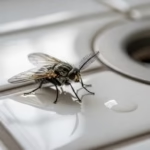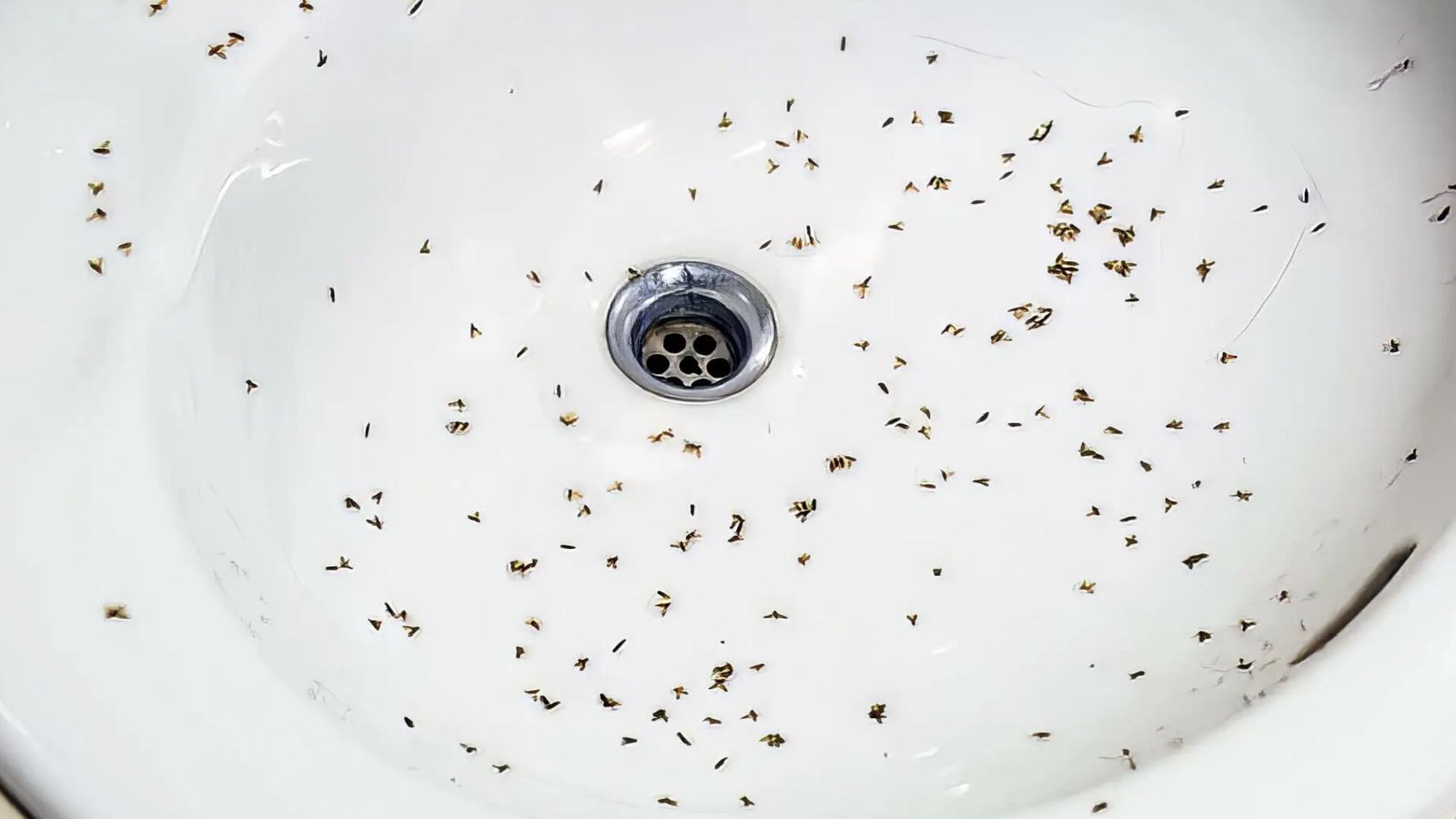
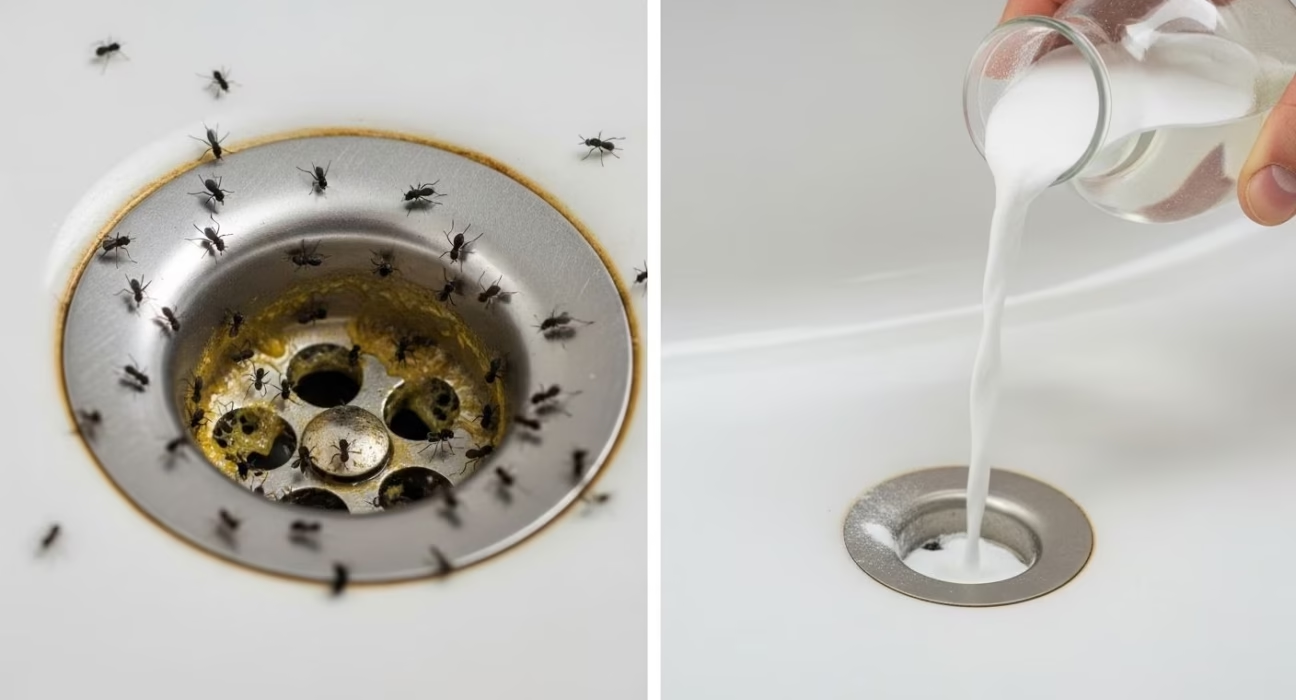
You scrub your bathroom sink until it sparkles. You wipe down the countertops, take out the trash, and leave the room smelling like citrus. But the moment you turn on the faucet, a cloud of tiny black bugs flies up from the drain. It is incredibly frustrating. You are likely dealing with fungus gnats or phorid flies, persistent pests that treat your household plumbing like a five-star resort.
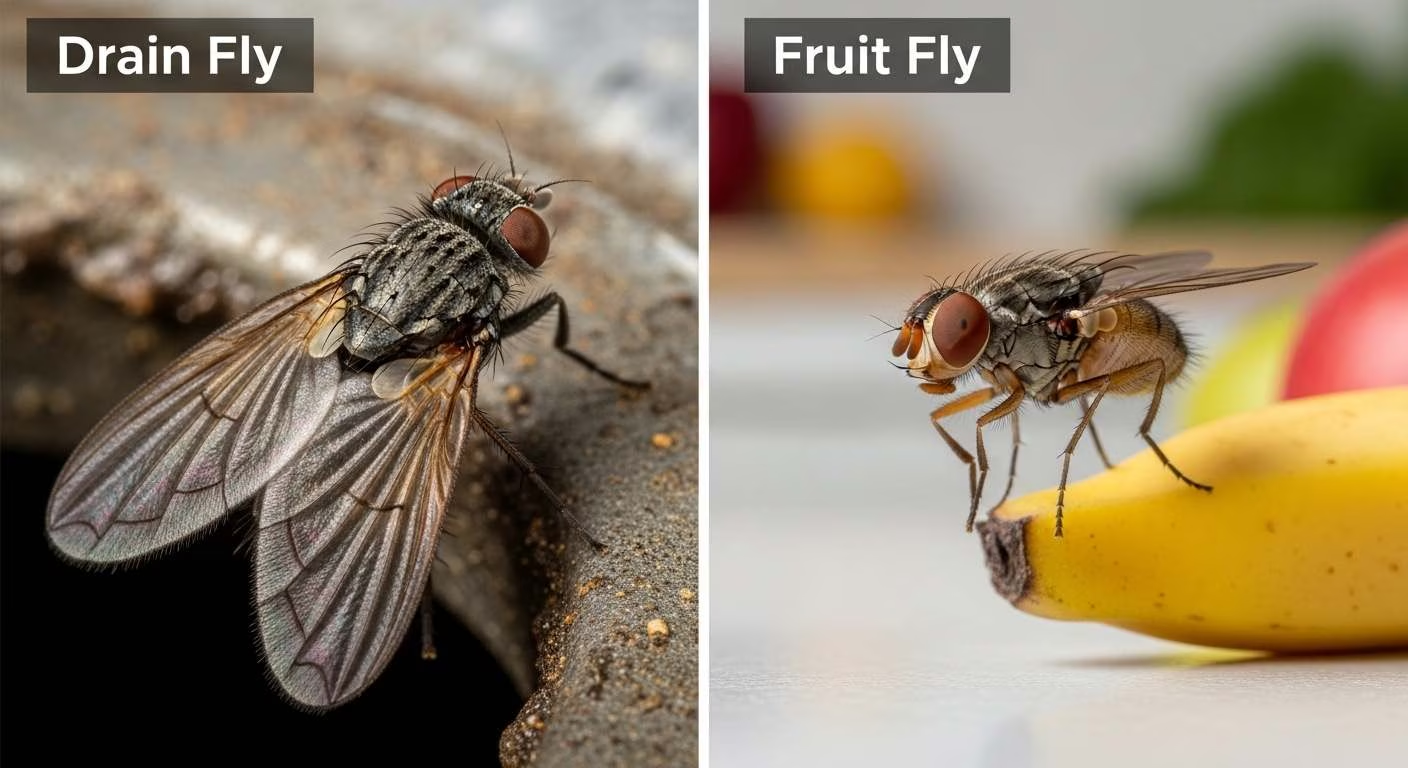
Understanding the battle of drain gnats vs fruit flies is the first step. Fruit flies hover around overripe bananas on your kitchen counter, but if you want to learn how to kill gnats in drains, you have to look deeper. These pests breed inside your plumbing and do not care how clean your sink surface is; they only care about the dark, damp, food-rich environment hiding below the surface.
To eliminate these pests, you have to think like a plumber and act like an exterminator. This guide will walk you through exactly how to destroy the infestation at its source, target both adult gnats vs larvae, and keep your pipes clear for good.
Why Gnats Appear in “Clean” Sinks
Household drains provide the perfect storm for certain insect species. Below the shiny metal drain stopper lies a complex ecosystem. Phorid flies and fungus gnats thrive in moisture-rich environments. They seek out the decaying organic matter that naturally accumulates inside your pipes.
Every time you wash your hands, brush your teeth, or rinse a plate, hair, skin cells, soap scum, and food particles wash down the drain. This debris sticks to the walls of the tailpiece (the straight pipe dropping down from your sink) and settles in the U-bend of your P-trap. Over time, this organic matter in pipes decomposes, creating a thick, sticky slime layer known as biofilm.
Adult gnats fly down into the drain to lay their eggs inside this biofilm. The gelatinous slime protects the eggs and provides an endless food supply for the hatching larvae. If you have standing water in sinks due to a slow clog, the breeding process accelerates. You cannot just swat the flying adults. You must destroy the nursery hiding inside the pipe.
The Duct Tape Method
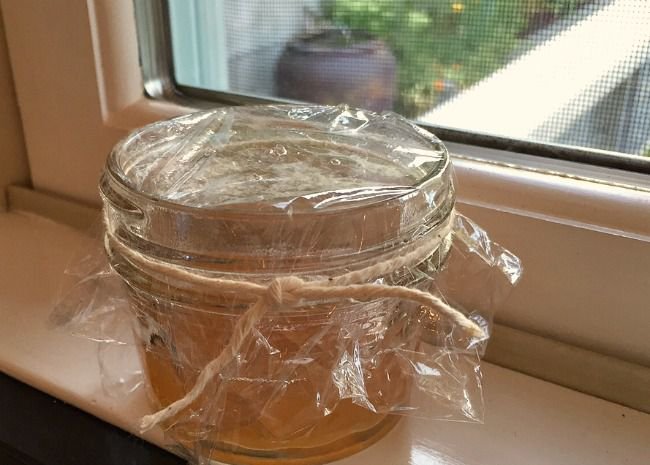
Before you start dismantling your plumbing or pouring treatments down the sink, you need to confirm exactly where the gnats are coming from. The duct tape test is the most reliable way to pinpoint the source of an infestation.
Here is how to do it:
- Dry the area completely around the suspected drain before you go to bed.
- Take a strip of clear tape or duct tape and place it over the center of the drain. Do not seal the drain completely; leave a small gap on the edges so air can flow and the gnats are encouraged to fly up.
- Leave the tape overnight.
- Check the tape in the morning.
If you find flies stuck to the underside of the tape, you have a confirmed drain infestation. Make sure to test all potential sources, including the overflow vent located near the top of your bathroom sink bowl. The overflow vent connects directly to the tailpiece and frequently houses thick biofilm, making it a common hiding spot for larvae.
Why Standard Bleach Fails
When homeowners see bugs coming out of a drain, their first instinct is usually to reach for a bottle of bleach. Pouring a gallon of bleach down the sink seems like a logical way to kill anything living inside. However, standard household bleach completely fails when it comes to long-term biofilm removal.
To understand why, you have to look at how biofilm works. Biofilm is a water-resistant, protective matrix created by bacteria and decaying matter. When you pour bleach down the drain, it flows rapidly down the tailpiece, pools briefly in the P-trap, and flushes away. It simply glides right over the top of the slime layer.
Bleach might kill a few adult gnats caught in the crossfire, but it does not penetrate the slime to destroy the larvae and eggs embedded deep inside. Furthermore, bleach damages the environment, can corrode certain types of older plumbing, and destroys the beneficial bacteria if you rely on a septic system. To actually solve the problem, you need to physically break up the slime and flush the organic material away.
Step-by-Step Killing Protocol
Eliminating a drain gnat infestation requires a three-pronged approach. You need to mechanically remove the breeding ground, flush the pipes with a reactive agent, and trap the remaining adult survivors.
Step 1: The Mechanical Scrub
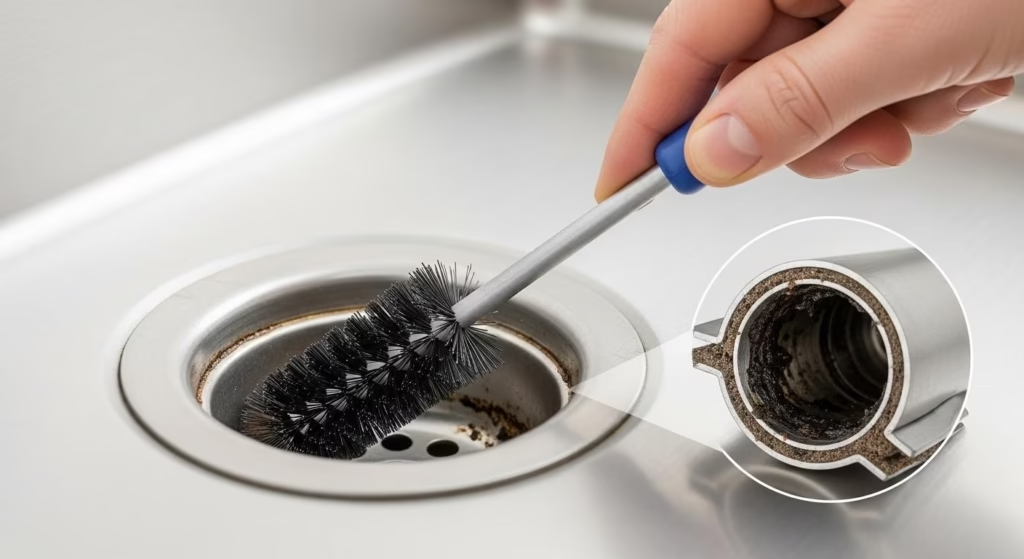
The most important step in this entire process relies on physical force. You must break up the biofilm inside the pipes.
First, remove the drain stopper. You may need to unscrew the pivot rod nut under the sink to pull the stopper out completely. Clean the stopper thoroughly in a separate bucket or sink, as it often harbors a massive amount of thick black sludge.
Next, take a flexible pipe brush and push it down into the tailpiece. Move the brush up and down vigorously while twisting it around the sides of the pipe. You want the bristles to scrape the inner walls, tearing apart the slime layer. Pull the brush up, wipe off the sludge with a paper towel, and repeat the process until the brush comes up relatively clean. Do not forget to push a smaller brush into the overflow vent if your sink has one.
For stubborn clogs that have created standing water, you may need to use a plunger to push the thickest blockage through the U-bend before proceeding to the next step. P-trap cleaning is essential. If the pipe brush cannot reach deep enough, place a bucket under the P-trap, unscrew the slip nuts, and physically remove the curved section of the pipe to wash it out manually.
Step 2: The Salt, Baking Soda, and Vinegar Flush
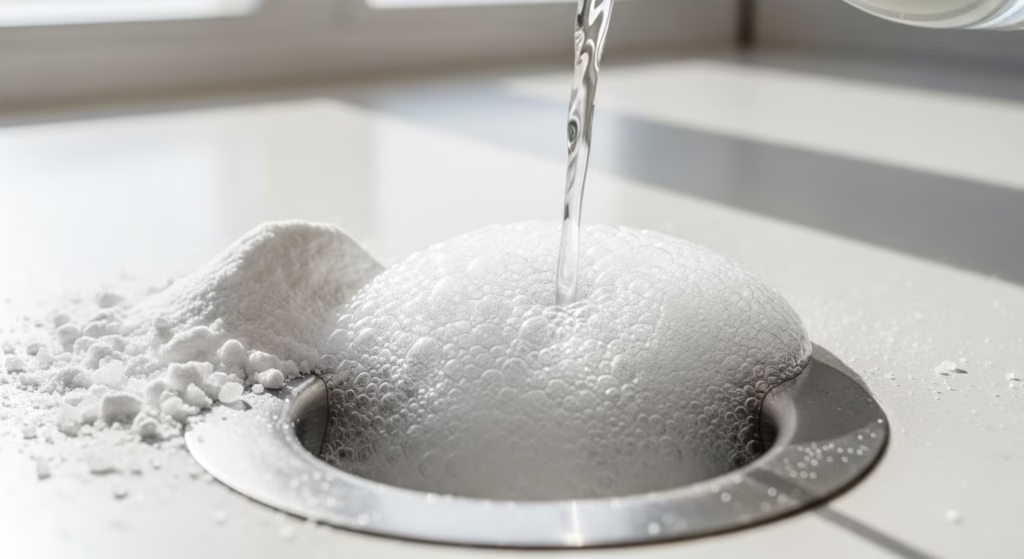
Once you have manually scraped the walls, it is time to flush out the loosened debris and kill the exposed larvae. A baking soda and vinegar flush creates a powerful, expanding chemical reaction that scours the inside of the pipe.
- Pour half a cup of salt and half a cup of baking soda directly down the drain. The salt acts as an abrasive element.
- Pour one cup of white vinegar down the drain.
- Immediately cover the drain opening with a rag or plug to force the expanding foam downward into the P-trap rather than up into the sink bowl.
- Let the mixture sit and fizz for 15 to 20 minutes.
- Follow up by pouring a large pot of boiling water directly down the drain. The boiling water washes away the dislodged slime, kills remaining larvae, and clears the U-bend. Note: If you have older PVC pipes, use very hot tap water instead of boiling water to prevent warping the plastic.
Alternatively, if you prefer a chemical approach that targets organic matter, hydrogen peroxide for drains is highly effective. Pouring one cup of 3% hydrogen peroxide down the drain will cause it to foam upon contact with organic material, oxidizing the slime and killing larvae.
Step 3: The Trapping Phase
The mechanical scrub and the flush will destroy the eggs and larvae, cutting off the next generation of gnats. However, you will still have adult gnats flying around the room that survived the drain cleaning. You need to trap them before they find another moist environment to lay their eggs.
Create a trap using Apple Cider Vinegar (ACV) and liquid dish soap. Pour half a cup of ACV into a small bowl or jar. Add a few drops of dish soap and gently stir the mixture. Place the bowl near the affected sink.
The adult gnats are highly attracted to the sweet, fermented scent of the apple cider vinegar. When they land on the surface to drink, the dish soap breaks the surface tension of the liquid, causing the gnats to sink and drown immediately. Leave this trap out for a week after cleaning your drains to catch any remaining stragglers.
Long-term Prevention
Once you have successfully cleared the infestation, your goal is to keep the plumbing completely free of the organic buildup that attracts gnats in the first place. Regular drain maintenance requires minimal effort but yields massive results.
Enzyme Cleaners
Make a habit of using enzyme-based drain cleaners once a month. Unlike harsh chemicals, enzyme cleaners contain natural bacteria that feed on hair, grease, and soap scum. They literally eat the organic matter before it can turn into a thick biofilm. Because they do not rely on caustic chemicals, enzyme cleaners are excellent septic safe treatments that protect your local ecosystem while keeping your plumbing perfectly clear.
Control Moisture
Gnats require high moisture levels to survive outside of the drain. Focus on household humidity control. Run the exhaust fan in your bathroom during and after showers to pull excess moisture out of the air. Wipe down countertops to prevent small puddles of water from sitting overnight.
Fix Plumbing Issues
Inspect the area under your sinks regularly. Fixing leaky pipes is crucial for pest control. Even a tiny, slow drip from a loose slip nut on your P-trap can create a damp environment under your vanity cabinet, encouraging gnats to breed outside the pipe. Tighten any loose connections and replace worn rubber washers immediately.
Keep the P-trap Full
If you have a guest bathroom or a basement sink that rarely gets used, the water inside the P-trap will eventually evaporate. The P-trap is designed to hold a small pool of water at all times to block sewer gases from rising into your home. When that water evaporates, the dry pipe provides an open highway for pests moving up from the main sewer lines. Make a schedule to run water in unused sinks, tubs, and showers for sixty seconds every two weeks to keep the traps full and functional.
Conclusion
Tackling gnats in household drains requires both knowledge and determination.
Start by telling the difference between drain gnats and common fruit flies. Confirm the source of the infestation using the duct tape method.
Remember, simple solutions like bleach often fail because they can’t reach the protective biofilm or decaying organic matter deep in your plumbing.
A methodical approach works best. Begin with a pipe brush to scrub away biofilm. Follow that up with a flush of salt, baking soda, and vinegar or use hydrogen peroxide. This removes debris and larvae. Then, set out apple cider vinegar and dish soap traps to catch any surviving adults.
For long-term prevention, keep up a routine with enzyme-based drain cleaning. Control humidity in your home, repair leaky pipes quickly, and make sure the P-trap always has water to block pests from getting inside.
By understanding the habits of fungus gnats and phorid flies and staying consistent with these steps, you can restore your drains to a clean, pest-free state and keep them that way.
FAQs
Can I use bleach to kill gnats in my drains?
No, bleach is too thin to penetrate the thick biofilm where eggs are hidden; it’s better to use a mechanical scrub and a baking soda flush.
Why do gnats keep coming back after I clean?
They return because you’re likely only killing adults; you must physically remove the organic slime inside the P-trap to stop the breeding cycle.
How long does the baking soda and vinegar method take?
Let the mixture fizz and sit for at least 30 minutes before flushing with boiling water to effectively loosen pipe debris.
Are these “drain gnats” actually fruit flies?
Usually not; fruit flies want kitchen produce, while “drain gnats” specifically feed on the decaying organic matter and moisture inside your plumbing.
Is boiling water enough to kill gnats?
It helps as a first strike, but it flows too fast to clean the pipe walls; you need salt and vinegar to actually scrub the area.