Quick Answer: “To get rid of ants in your house, follow their trail to find where they’re entering, remove accessible food and water sources, and clean up visible ants with soapy water. For an ongoing infestation, use an ant bait labeled for the species and treatment location. Give workers time to carry the bait back to the colony, and avoid spraying around active bait stations. Once the problem is under control, seal entry gaps and keep food securely stored.”
You wipe a line of ants off your kitchen counter, clean up the crumbs, and assume that’s the end of it. But the next morning, they’re back. This time, they’re coming from behind the refrigerator or crawling along the windowsill.
It’s a familiar household problem. You get rid of the ants you can see, yet more keep showing up.
That’s because the ants moving across your floor are usually just a small part of a much larger colony. The nest might be outside beneath a sidewalk, inside a wall, or somewhere else you can’t easily reach.
If you’re trying to figure out how to get rid of ants, the first thing to understand is that killing individual workers isn’t always enough.
You need to find what attracts them, figure out how they’re entering, and decide whether the colony itself needs treatment.
Here are seven practical steps to deal with ants indoors and make your home less inviting to them.
How to Get Rid of Ants in Your House in 7 Steps
Start with the ants you can see, but don’t rush to spray them. A few minutes spent watching their movement can help you find the source and choose a better treatment.
Step 1: Identify the Ants You’re Dealing With
Before buying an ant killer, look closely at the insects.
Different ant species have different nesting habits and food preferences. Some live outdoors and enter homes to search for food. Others may establish nests inside walls, beneath floors, or in damp wood.
For example, pavement ants often nest around sidewalks, foundations, and concrete slabs. Odorous house ants may nest outdoors or in concealed indoor spaces.
Carpenter ants are different. They can excavate galleries in wood, particularly where moisture problems are present.
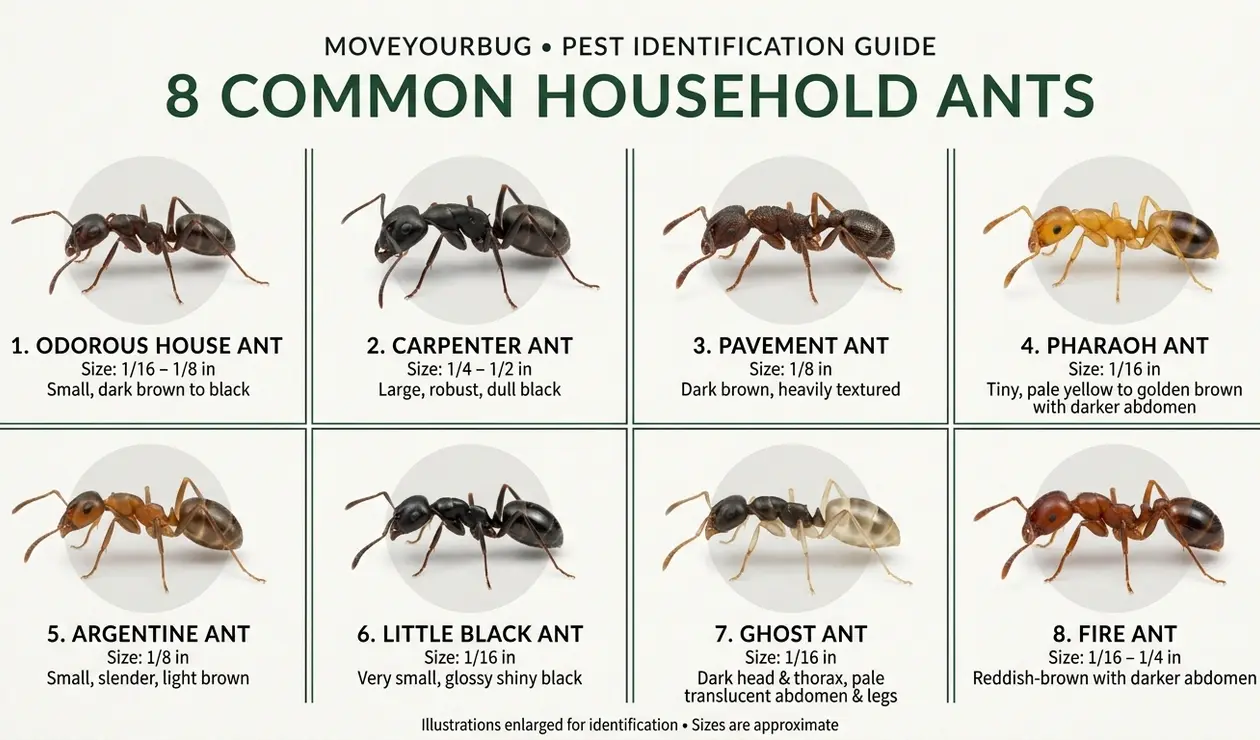
Here are some common ants found in US homes:
| Ant type | What to look for | Typical nesting areas |
| Odorous house ants | Small, brown to dark brown; may produce a strong odor when crushed | Soil, beneath objects, wall voids |
| Pavement ants | Small, brown to black; often follow trails near foundations | Soil beneath pavement, sidewalks, slabs |
| Carpenter ants | Larger ants, often black or reddish-black | Damp wood, trees, structural cavities |
| Pharaoh ants | Very small, yellowish to reddish ants | Warm indoor spaces and wall voids |
| Little black ants | Tiny, dark-colored workers | Outdoor soil and sheltered nesting sites |
Color alone isn’t enough to identify an ant. Several species can look alike without magnification.
Ants belong to the family Formicidae. Most workers have elbowed antennae and a narrow waist between the thorax and abdomen. Small waist segments, called petiole nodes, can help distinguish species.
According to the University of Minnesota Extension’s ant identification guide, knowing the species helps determine where it nests, what it eats, and which treatment is most suitable.
If you can’t identify the ants, take a close-up photo or collect a specimen for a local extension office or pest professional.
Why it matters: The wrong treatment may provide little control or, with certain species, make an infestation harder to manage.
Step 2: Follow the Ant Trail to Find Where They’re Entering
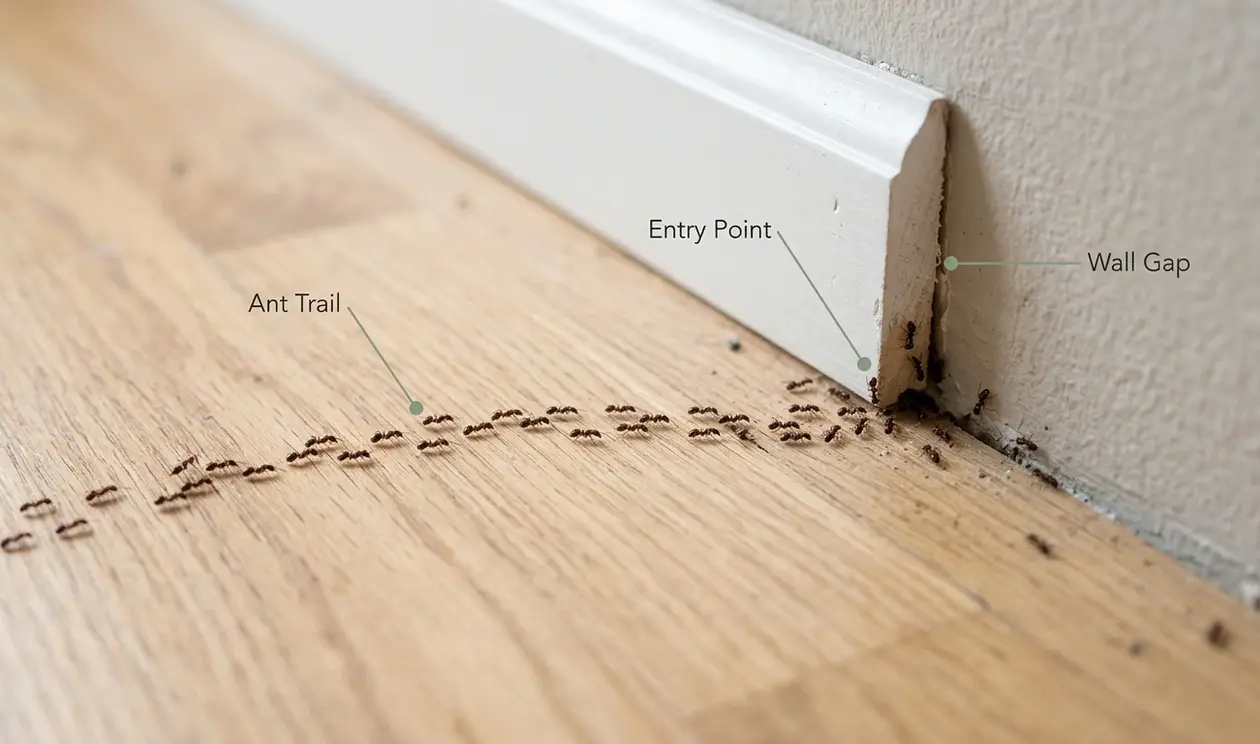
If you see a line of ants moving across the floor, resist the urge to wipe it away immediately.
Watch where the ants are going.
Ant workers often follow chemical signals called pheromone trails. These signals help other members of the colony locate food and return along established routes.
Look for ants traveling beside:
- Kitchen baseboards and cabinets
- Window frames and door thresholds
- Plumbing pipes beneath sinks
- Wall cracks and foundation gaps
- Electrical or utility openings
- Countertop edges and floor joints
Use a flashlight to follow the trail.
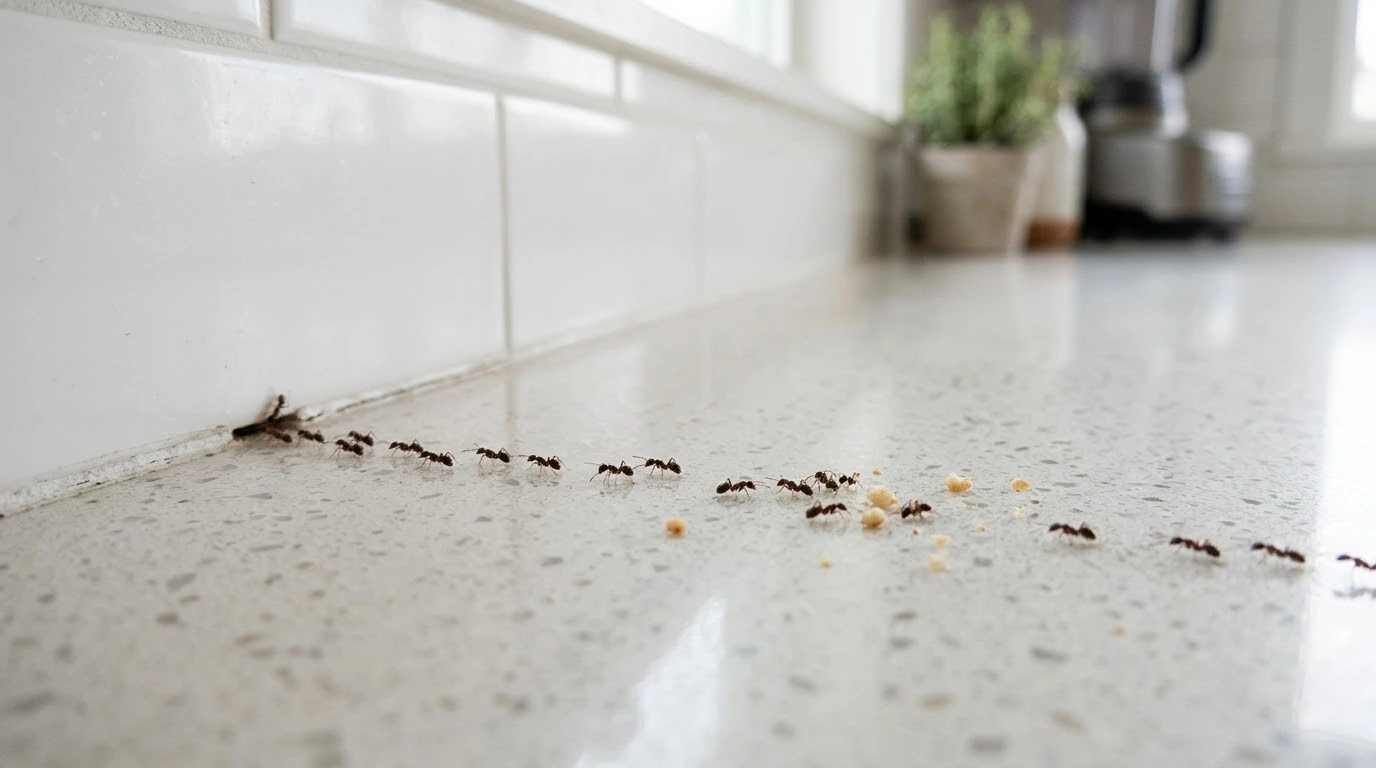
If you find a small opening beneath a window or behind a cabinet, make a note of it. Check the exterior of your house for a matching gap or nearby ant activity.
You might discover that workers are entering through a foundation crack and traveling directly to a pet food bowl.
In other cases, the trail may disappear into an inaccessible wall cavity.
Don’t tear apart cabinets or open walls just to follow the ants.
Identifying the general route is often enough to guide your next steps.
Tip: If the trail leads outside, look around stones, mulch, sidewalk cracks, and landscaping near the foundation. These areas may contain nests or established foraging routes.
Step 3: Remove Food and Water Sources
Ants don’t need a large amount of food to become interested in your home.
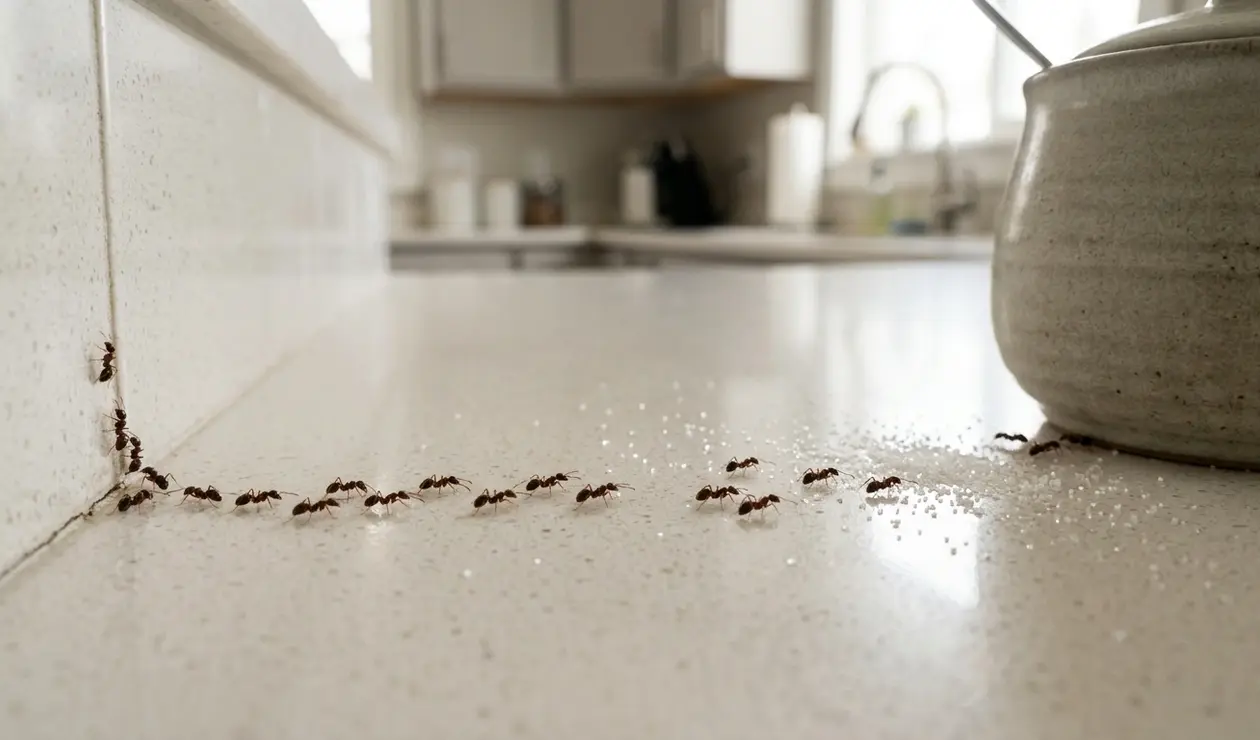
A few cookie crumbs behind the toaster, dried juice near the refrigerator, or leftover pet food can attract foraging workers.
Some ants prefer sugary foods. Others search for proteins, fats, or grease. Their preferences can change depending on the species and the needs of the colony.
Start with your kitchen.
Wipe counters, clean beneath appliances, and inspect pantry shelves. Transfer open food packages into sealed containers and rinse recyclable bottles before storing them.
Don’t forget moisture.
A leaking faucet or damp area beneath a sink may attract ants even when no food is nearby.
Check bathrooms, laundry areas, and kitchen plumbing for signs of water leaks.
Quick cleaning checklist:
- Remove crumbs and food spills.
- Store sugar, cereal, snacks, and pet food in sealed containers.
- Empty and clean trash cans regularly.
- Wash dishes instead of leaving food residue overnight.
- Fix dripping faucets and plumbing leaks.
- Wipe damp counters and accessible surfaces.
- Clean beneath appliances where debris collects.
Removing attractants won’t always eliminate an established colony. But it makes your home a less dependable food and water source.
Step 4: Remove Visible Ants and Clean Their Trails
Once you’ve located their route, you can begin cleaning.
For a small number of ants, use a damp cloth or sponge with mild soapy water.
A vacuum may be more practical when many workers are gathered in one area.
After removing the ants, wipe the surface along their trail.
Soapy water can help remove scent trails, making it harder for additional workers to follow the same route immediately.
Here’s what to do:
- Note the entry point before removing the trail.
- Vacuum or wipe up visible ants.
- Clean the route with mild soapy water.
- Remove nearby food residue.
- Dry the area.
- Watch for renewed activity.
Use a cleaning method appropriate for the surface. Certain finishes can be damaged by harsh or acidic cleaners.
The University of California Integrated Pest Management Program recommends cleaning ant trails with soapy water, finding entry points, removing food sources, and using baits when necessary.
Remember that cleaning is only one part of the process.
It removes the ants inside your home, but it doesn’t necessarily affect the nest.
If workers keep returning along the same or a different route, move on to colony control.
Step 5: Use Ant Bait to Address an Active Colony
For many recurring household ant problems, baiting can be more useful than repeatedly spraying the ants you see.
Ant baits work differently from contact sprays.
A contact spray is intended to kill or repel exposed insects, depending on the product.
Ant bait combines an attractive food source with an insecticide. Workers collect it and may carry it back to their nest, where it can reach other colony members.
Some bait products act slowly so workers have time to return to the colony before the insecticide affects them.
This makes baiting a useful option when the goal is to reduce the colony rather than kill individual foragers.
How to Use Ant Bait Properly
- Identify the ants as accurately as possible.
- Select a bait labeled for the intended pest and indoor or outdoor location.
- Place the bait station where the product label allows, near active trails.
- Keep it away from children, pets, and food-contact surfaces.
- Let ants visit the bait without disturbing them.
- Monitor activity and follow the label for replacement or removal.
You may see more ants gathering around the bait initially. They’re responding to the food attractant.
That doesn’t automatically mean the infestation is getting worse.
Avoid spraying insecticides directly on or around active bait stations. Sprays may repel or kill workers before they carry bait back to the nest.
Not every species prefers the same bait.
Some are attracted to sugar-based products, while others may prefer protein- or grease-based formulations.
If workers consistently ignore a bait, check its freshness, placement, and suitability rather than immediately applying more insecticide.
How Long Does Ant Bait Take to Work?
Results vary by product, species, and infestation.
Some colonies may show reduced activity within several days. Others require longer treatment or a different approach.
Don’t judge every bait by whether it kills ants immediately.
The goal is colony-level control, and that can take more time than removing visible workers with a spray.
What About Homemade Borax Bait?
Borax is often mentioned in online discussions about ant control.
Although borate compounds are used in some commercial ant baits, homemade mixtures don’t provide the same labeling, concentration controls, or safety instructions.
Avoid placing homemade pesticide mixtures in accessible containers, particularly around children and pets.
Use properly labeled products as directed.
For more information on pesticide use and storage, see the US Environmental Protection Agency’s Citizen’s Guide to Pest Control and Pesticide Safety.
Step 6: Seal Cracks and Other Entry Points
Once ant activity has decreased and you’ve addressed the likely colony source, work on preventing new workers from entering.
Check around doors, windows, plumbing openings, and foundation joints.
Ants can use very small gaps, so focus on the openings where you’ve observed active trails.
Depending on the location, you may need:
- Exterior-grade caulk
- Door weatherstripping
- Replacement door sweeps
- Repairs to damaged window screens
- Appropriate sealing around utility penetrations
Inspect the exterior of your home as well.
Tree branches touching the house, stored firewood against exterior walls, and dense vegetation near the foundation can provide shelter or convenient travel routes.
Trim vegetation where appropriate and correct gaps around the building.
If you suspect an active nest inside a wall, don’t assume sealing the nearest hole will solve the problem. Ants may find another exit.
Address the infestation first, then use sealing as part of prevention.
Step 7: Monitor Activity and Prevent Another Infestation
After treatment, check the areas where ants were active.
Look around sinks, pantry shelves, windows, doorways, and baseboards.
A few occasional workers may be searching for food. A steady trail returning to the same location suggests the problem hasn’t been fully resolved.
Keep food sealed, correct leaks, and maintain the entry-point repairs you’ve made.
If ants return, observe whether they’re using the same route.
Also consider whether your bait is suitable for their species and current food preferences.
For persistent infestations, identifying and locating the actual colony is often more productive than switching between household remedies.
Why Do Ants Keep Coming Into Your House?
Ants usually enter homes because something inside provides food, moisture, or shelter.
Outdoor conditions can also influence their activity.
After heavy rain, some ants may move away from flooded nesting areas. During hot or dry weather, water sources inside buildings may become more attractive.
In other situations, a colony may be nesting close to the foundation and sending workers indoors whenever food becomes available.
Here are several clues:
| What you’re noticing | Possible explanation | What to check |
| Ants near the kitchen sink | Moisture or food residue | Leaks, dishes, cabinet gaps |
| Ants around pet food | Available food source | Feeding area and storage |
| Ants near windows | Exterior entry route | Frames, screens, vegetation |
| Ants after rainfall | Changed outdoor nesting or foraging conditions | Foundation and exterior gaps |
| Ants throughout several rooms | Multiple trails or concealed nesting | Species and nesting locations |
| Large ants near damaged wood | Possible carpenter ant activity | Wood moisture and nesting evidence |
These clues aren’t enough to identify the species, but they can help narrow down the likely source.
What’s the Best Way to Get Rid of Ants Indoors?
The best method depends on whether you’re dealing with a few visiting workers or an active colony.
Here’s how common ant-control methods compare.
| Method | Best use | Main limitation |
| Soapy water | Removing visible ants and scent trails | Doesn’t control the colony |
| Vacuuming | Quickly removing groups of workers | More ants may arrive |
| Food and moisture control | Reducing attractants | Doesn’t directly eliminate a nest |
| Ant bait stations | Treating susceptible colonies | Requires correct bait and patience |
| Contact sprays | Certain labeled spot treatments | May miss the colony or interfere with bait |
| Sealing entry points | Reducing access indoors | Doesn’t remove an existing nest |
| Professional treatment | Hidden or persistent infestations | Requires professional assessment and expense |
For most ordinary household problems, begin with cleaning, inspection, and excluding ants where possible.
If activity continues, use an appropriate bait or seek help identifying the nest.
This approach combines several methods rather than depending on a single spray or household remedy.
It’s an example of integrated pest management (IPM): identifying the pest, reducing favorable conditions, monitoring activity, and using targeted treatments when needed.
How to Get Rid of Ants in Different Rooms
Not every room attracts ants for the same reason.
Ants in the Kitchen
Kitchens provide easy access to food, water, and sheltered spaces.
Start by cleaning counters, inspecting pantry storage, and checking around the sink.
Look beneath appliances for crumbs and behind cabinets for entry gaps.
If ants are entering from outside, note their route before wiping it away.
Use only pest-control products specifically labeled for the intended location, keeping them away from food-preparation surfaces.
Ants in the Bathroom
Ants near bathrooms may be attracted to moisture.
Inspect dripping faucets, leaking pipes, damp cabinets, and cracks around windows.
If ants repeatedly appear near a wet wall or floor, investigate the moisture problem rather than assuming they’re searching for food.
Ants in Bedrooms and Living Rooms
Ants can enter through windows, baseboards, wall gaps, and doorways.
Check for snacks, drink spills, pet food, and other attractants.
If you can’t find a food source, follow their trail. They may simply be traveling through the room to another location.
Do Natural Ant Repellents Actually Work?
Natural remedies are popular because they’re inexpensive and easy to try.
But it’s important to distinguish between temporarily disturbing ants and controlling an entire colony.
Vinegar
Wiping a surface with diluted vinegar may temporarily disrupt pheromone trails.
However, vinegar isn’t a dependable colony treatment.
It can also damage certain stone or finished surfaces, so check compatibility before cleaning.
Cinnamon
Cinnamon is frequently recommended as a barrier against ants.
Some ants may avoid strongly scented material temporarily, but sprinkling cinnamon around the house isn’t a reliable way to eliminate an established infestation.
Peppermint Oil
Some essential-oil compounds have shown insect-repellent activity in particular conditions.
That doesn’t mean a homemade peppermint spray will eliminate a nest.
Concentrated essential oils may also create exposure risks for pets, especially cats.
Diatomaceous Earth
Certain pesticide products containing diatomaceous earth can affect insects by damaging their protective outer layer and promoting water loss.
Effectiveness depends on the formulation, application, and environmental conditions.
Dust can irritate the respiratory system, so don’t assume every diatomaceous earth product is harmless simply because it’s described as natural.
Only use products labeled for the intended pest and application site.
Baking Soda and Sugar
Mixing baking soda with sugar is another common online suggestion.
However, reliable evidence that this homemade mixture consistently eliminates household ant colonies is lacking.
A properly selected bait is a more dependable approach for many recurring infestations.
Bottom line: Cleaning, removing attractants, and sealing gaps are useful nonchemical measures. Homemade repellents shouldn’t replace appropriate colony control when a persistent infestation is present.
Why Do Ants Keep Coming Back After Treatment?
This is one of the most frustrating parts of dealing with household ants.
You buy bait, clean the counter, seal the window gap, and still find more workers a few days later.
There are several possible reasons.
The Colony Is Still Active
Killing visible workers doesn’t necessarily affect the queen, developing brood, or other workers inside the nest.
If the colony remains active, more ants may continue searching for food.
The Ants Aren’t Interested in Your Bait
Food preferences vary among species and may shift throughout the season.
A bait that worked previously may be less attractive under different conditions.
Check the label, product condition, and placement.
Another Entry Point Is Available
Ants can travel through gaps you haven’t noticed.
Sealing one crack may redirect workers to another opening.
Continue monitoring their trails.
Food or Moisture Is Still Present
Crumbs beneath appliances, an open pet food bowl, or a slow plumbing leak may continue attracting foragers.
Pay attention to less obvious sources.
More Than One Nest Is Involved
Some species form multiple connected nesting sites or colonies with several queens.
Treating a single visible location may not address every source of activity.
Sprays Are Interfering With Baits
Applying a repellent insecticide near bait can reduce the number of workers collecting it.
Avoid combining treatments without checking their labels and compatibility.
If repeated attempts aren’t working, identify the ant species before trying another product.
How to Tell When the Ant Problem Is More Serious
Most ants found in homes are nuisance pests.
However, certain signs deserve closer attention.
Large ants near wood: Carpenter ants may nest inside damp or damaged wood. They don’t eat wood like termites, but their nesting activity can create galleries that weaken affected material.
Tiny yellow ants in several rooms: These may be Pharaoh ants or another small species. Pharaoh ant colonies can respond to some pesticide applications by splitting into additional nests, so correct identification is important.
Repeated activity from wall cavities: This may suggest concealed nesting rather than occasional outdoor foraging.
Heavy activity despite appropriate treatment: A large or difficult-to-reach colony may require professional inspection.
Stinging ants: Some species can cause painful stings, and allergic reactions may require urgent medical attention.
If you’re unsure what kind of ant you’re dealing with, an extension office or pest professional can help determine the species.
When Should You Call a Pest Control Professional?
Simple household ant problems can often be handled with cleaning, baiting, and entry-point repairs.
But professional help is worth considering when:
- Ants keep returning despite correctly applied treatments.
- You suspect carpenter ants inside structural wood.
- Large numbers of ants emerge from walls or concealed areas.
- Several rooms have persistent activity.
- You suspect Pharaoh ants.
- You cannot locate or safely access the breeding colony.
- The infestation is associated with structural damage or serious moisture problems.
An experienced pest professional can inspect likely nesting locations, identify the species, and recommend appropriate control methods.
Ask what pest has been identified, which treatment is proposed, and whether the problem also requires repairs or exclusion work.
How to Keep Ants Out of Your House
Long-term prevention means giving ants fewer reasons and opportunities to enter.
You don’t need to eliminate every ant nest outdoors. Ants are part of the environment, and many species help break down organic matter or prey on other insects.
Focus on protecting your home’s interior.
Keep pantry foods in sealed containers, clean spills promptly, and remove debris beneath kitchen appliances.
Repair plumbing leaks and avoid allowing moisture to accumulate beneath sinks.
Inspect common entry points around doors, windows, foundation gaps, and utility lines.
Keep firewood and other stored materials away from the foundation when practical, and trim vegetation touching exterior walls.
Finally, monitor areas where ants have appeared before.
Early signs of activity are easier to investigate than a well-established trail running through several rooms.
Final Thoughts
If you want to know how to get rid of ants in your house, start by finding out why they’re entering.
Follow their trail, remove accessible food and water sources, and clean up workers already inside.
For an established infestation, select an appropriate bait rather than repeatedly spraying the ants you see.
Once activity decreases, seal entry gaps and maintain the areas that originally attracted them.
The goal isn’t to kill every ant outdoors. It’s to stop recurring ant activity inside your home by addressing the source of the problem.
How do I get rid of ants in my house quickly?
Clean up visible ants with soapy water, remove accessible food sources, and locate their entry point. Persistent infestations may need an appropriate bait.
What kills ants inside the house?
Contact insecticides may kill exposed ants, while suitable ant baits can help control colonies. Choose products labeled for the species and location.
How long does it take to get rid of an ant infestation?
Small foraging problems may improve quickly after cleaning. Established colonies can take several days to weeks or longer, depending on the species and treatment.
Can ants live inside the walls of a house?
Yes. Certain species nest in wall voids, beneath flooring, or in damaged wood. Persistent activity from concealed openings may need inspection.
How do I keep ants away permanently?
Remove food and water attractants, seal active entry gaps, and control problem colonies when necessary. No method guarantees ants will never return.