Quick Answer: To find where ants are coming from, follow their trail backward from the food or water source toward a wall, window, door, or foundation gap. Check baseboards, plumbing openings, and outdoor walls for activity. Use a flashlight to trace their route without disturbing them. The point where ants enter your house may not be their actual nesting location.
You notice a few ants crawling across your living room floor. There’s no spilled food nearby, and the windows are closed. Still, more ants keep appearing from the same corner.
So where are they coming from?
Ants can squeeze through small openings around walls, windows, doors, and plumbing lines. Some travel from outdoor colonies, while others may already be nesting somewhere inside the house.
Knowing how to find where ants are coming from helps you locate their entry route before wasting time cleaning the wrong area or applying unnecessary treatments.
How to Find Where Ants Are Coming From: 5 Steps
The easiest way to track ants is to observe their movement before disturbing the trail.
Step 1: Find an Active Ant Trail
Start wherever you’ve noticed the most ant activity.
Look along baseboards, windowsills, floor edges, and cabinet corners. Use your phone’s flashlight to spot movement in darker areas.
If several ants are walking in the same direction, watch them for a few minutes.
Avoid wiping the trail immediately. You need to see where they’re traveling before removing the visible insects.
Step 2: Follow the Ants Backward
Watch ants moving away from food or water rather than those approaching it.
They may lead you toward a crack, doorway, or concealed opening.
Ants use chemical signals called pheromones to help other colony members follow established foraging routes.
According to the University of Minnesota Extension, following these routes can help locate nests, although observations sometimes take 30 minutes or longer.
Be patient if the ants disappear temporarily.
Step 3: Check Where the Trail Disappears
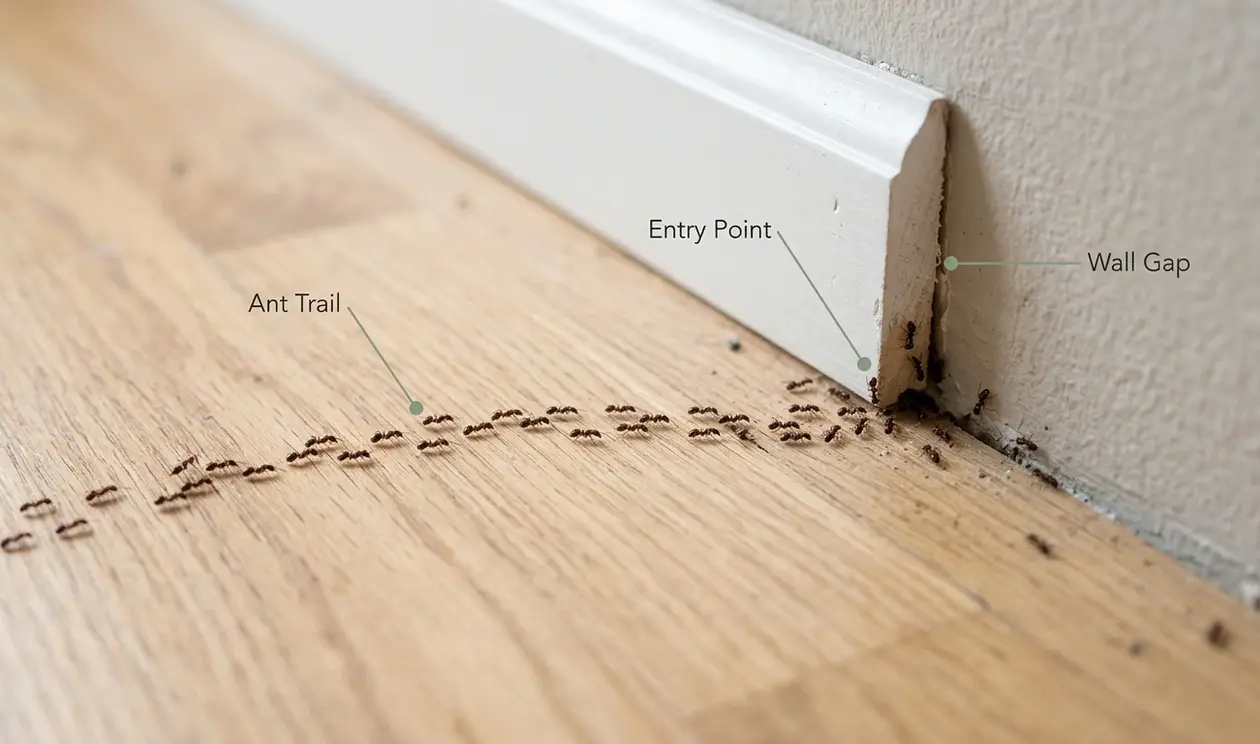
Once you’ve followed the ants across the room, look closely at their last visible location.
Common hiding spots include gaps beneath baseboards, window-frame joints, openings around pipes, and cracks where flooring meets a wall.
A trail disappearing behind a baseboard doesn’t necessarily mean the colony is nesting there.
The ants could be passing through a concealed space connected to an outdoor opening.
Step 4: Inspect the Outside of Your House
If the trail disappears into an exterior wall, check the corresponding area outdoors.
Look around the foundation, door thresholds, siding gaps, utility openings, and nearby landscaping.
Watch for ants traveling along pipes, branches, or cables that touch the building.
You may find workers moving between a garden bed and a tiny foundation crack.
Don’t disturb outdoor nests while investigating. Some ants can sting, and disturbing a colony may make tracking harder.
Step 5: Mark the Entry Point and Monitor It
Once you’ve identified a possible opening, take a photograph or mark its location with removable tape nearby.
Note when the ants are active and where they disappear.
Check the same spot again later to see if the route remains consistent.
Finding the entry point is useful, but it doesn’t always reveal the colony. If you need treatment options after locating the route, follow our guide on how to get rid of ants.
Common Places Where Ants Enter a House
Ants often use existing gaps and sheltered routes rather than creating new openings.
| Where You See Ants | Possible Entry Route | What to Inspect |
|---|---|---|
| Along baseboards | Wall or floor gaps | Floor joints and trim |
| Near windowsills | Window-frame openings | Seals, frames, exterior edges |
| Around bathroom sinks | Plumbing penetrations | Pipe gaps and damp areas |
| Beneath exterior doors | Door threshold gaps | Weatherstripping and corners |
| Near electrical outlets | Concealed wall pathways | Surrounding wall and visible gaps |
| Along foundation walls | Cracks or utility openings | Exterior foundation and siding |
| Around indoor plants | Nearby outdoor or indoor routes | Pots, window edges, adjacent walls |
These locations are starting points for inspection, not proof that a nest is nearby.
The University of California Integrated Pest Management Program recommends checking moisture sources, pipes, electrical wires, foundations, and wall openings when tracing household ants.
How to Find an Ant Trail When You Only See a Few Ants
Sometimes there isn’t an obvious line of ants to follow.
You might notice one ant near a bookshelf and another near the bathroom, with no visible connection between them.
These could be scout ants searching for food or water.
Try watching the same area at different times of day. A route that looks empty in the afternoon may become active later.
If ordinary observation isn’t enough, a small amount of food on a disposable card can sometimes attract foraging workers and make their route easier to follow.
Keep any food used for observation away from children and pets, remove it afterward, and avoid leaving it out overnight.
Don’t place attractants beside an existing pesticide bait station or where ants could contaminate food-preparation areas.
How Do Ants Know Which Route to Follow?
Ants don’t need to see their nest from across the room.
Many species rely on pheromone trails to communicate useful foraging routes.
When a worker finds a food source, it may return toward its colony while reinforcing a chemical trail that other ants can follow.
As more workers use the route, the trail can become easier to notice.
This explains why a few scattered ants can turn into a busy line across your floor.
However, not every ant species forms the same organized trails. Some forage more independently, so tracking behavior varies.
Are the Ants Coming From Outside or Nesting Indoors?
Finding ants near a wall doesn’t automatically mean they’re living inside it.
Many household ants travel indoors from outdoor nests beneath soil, mulch, stones, or other sheltered areas.
Others establish colonies in concealed indoor spaces.
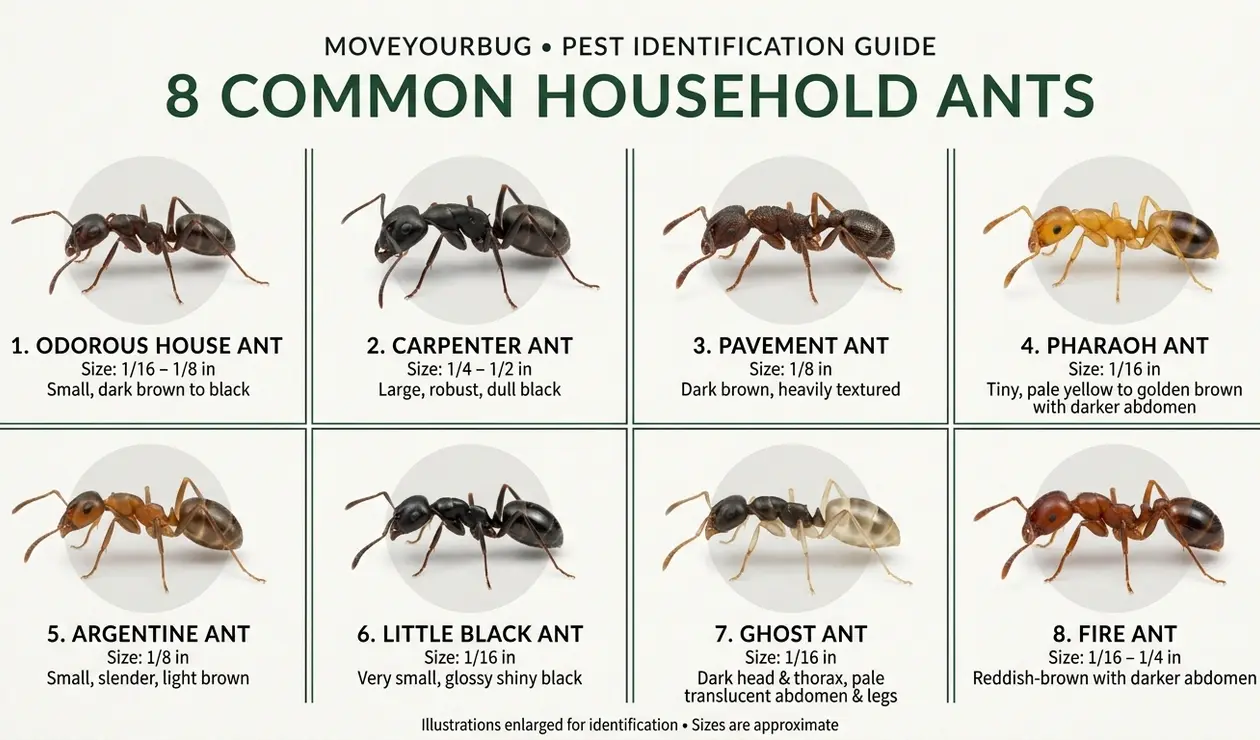
The type of ant you’re dealing with can also provide clues about its nesting habits. If you’re unsure which species you’ve found, our common household ants identification guide can help you compare their appearance, behavior, and typical nesting locations.
The following clues can help narrow down the possibilities.
Signs of outdoor activity: Workers move through a foundation gap, follow an exterior wall, or travel between landscaping and a doorway.
Signs of possible indoor nesting: Ants repeatedly emerge from an interior opening, appear across several rooms, or remain active when no outdoor route can be found.
The University of Maryland Extension explains that nests can be hidden behind baseboards, inside walls, beneath floors, or near damaged wood.
If ants repeatedly emerge from inaccessible spaces, avoid opening walls without a clear reason for doing so.
What If Ants Keep Appearing in the Kitchen?
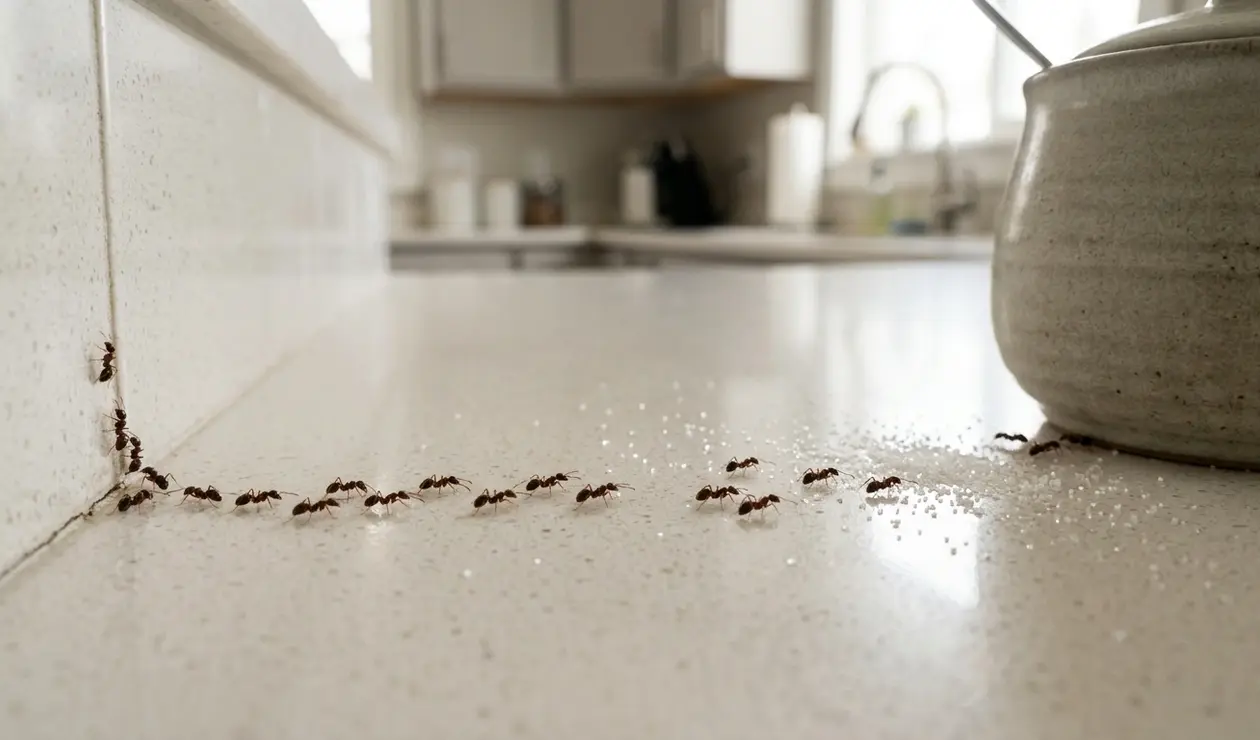
Kitchen ants often follow routes near countertops, plumbing openings, and cabinets.
Look for workers traveling behind the backsplash, beneath the sink, or around the refrigerator.
If their activity is concentrated around food storage or cooking areas, our guide to ants in the kitchen covers those specific problem areas and suitable control methods.
For this inspection, focus on tracing where the ants enter rather than treating every visible surface.
What If You Cannot Find the Ant Entry Point?
Some ant routes remain concealed behind walls, beneath floors, or inside inaccessible structural gaps.
If the trail disappears completely, record the last visible location and check nearby exterior areas.
Try another observation period rather than repeatedly disturbing the ants.
Large ants emerging from damp wood, persistent activity inside walls, or several unexplained routes may justify a professional inspection.
A pest professional can help determine if the insects are nesting indoors or simply traveling through the structure.
Conclusion
Finding where ants are coming from starts with watching their movement, following active trails, and inspecting likely entry gaps.
Pay attention to baseboards, window frames, plumbing openings, and foundations. A little patience can reveal routes that aren’t obvious at first glance.
Remember, an entry point isn’t always the actual nest. Identifying the ants’ route gives you a better starting point for addressing the problem.
FAQs:
How do I find where ants are entering my house?
Follow an active trail toward baseboards, windows, doors, or wall gaps. Inspect the matching exterior area for movement.
Why do ants suddenly appear out of nowhere?
Scout ants may locate food or water and recruit additional workers, making an established route suddenly noticeable.
Can ants come through electrical outlets?
Yes. Ants can travel through wall spaces and emerge around outlet openings. Never remove electrical covers without appropriate precautions.
Do ants always return to the same nest?
Many workers return to an established colony, but some species have multiple nesting sites or relocate their colonies.
How long should I watch ants to find their source?
Start with several minutes of observation. Difficult trails may require 30 minutes or longer, or a second check later in the day.