Quick Answer: “To get rid of ants in the kitchen, follow their trail to find where they’re entering, clean up crumbs and sugary spills, and store food in sealed containers. Remove visible ants with soapy water and fix any leaks around the sink. If ants keep returning, consider a suitable, labeled ant bait placed away from food-preparation surfaces. Once activity decreases, seal entry gaps and monitor the area.”
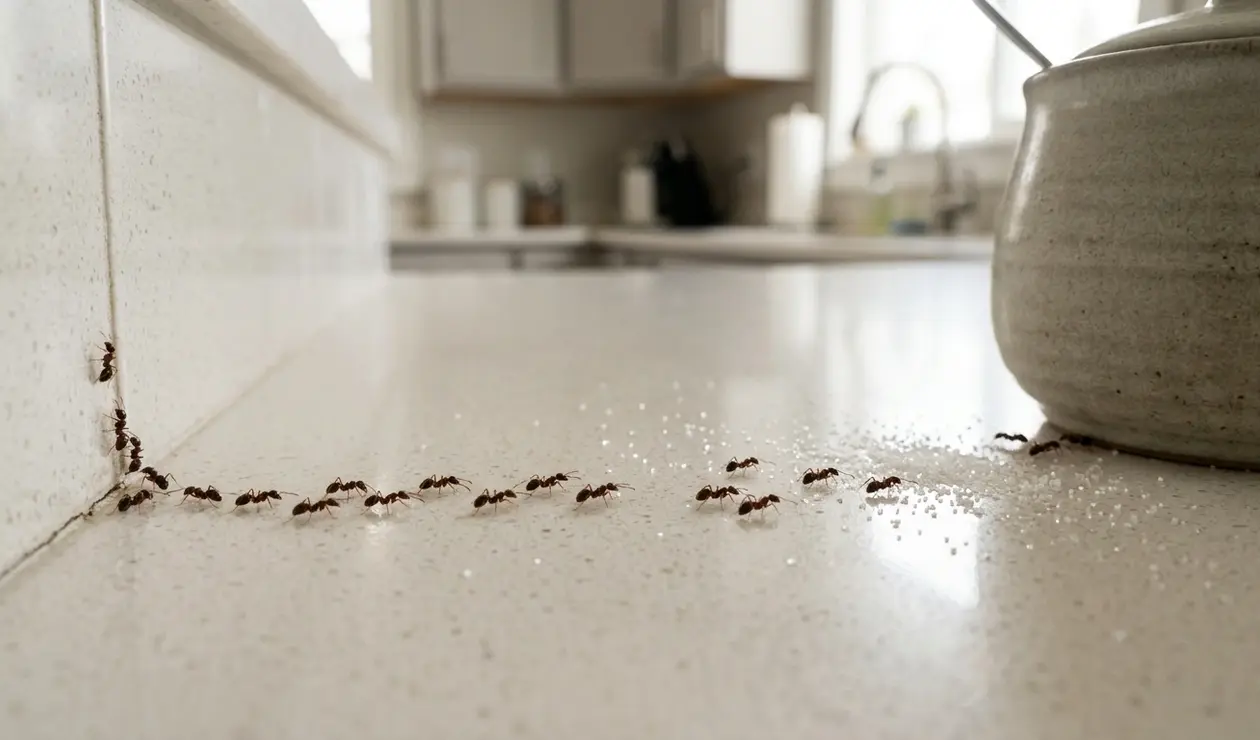
You walk into the kitchen, turn on the light, and spot a line of tiny ants moving across the countertop. Some are gathered near a sugar container, while others disappear behind the backsplash.
You wipe them away, but a few hours later, another group shows up.
Ants can be stubborn kitchen visitors because the room offers three things they often need: food, water, and shelter. A few crumbs under the toaster or a slow leak beneath the sink may be enough to attract workers searching for resources.
If you’re wondering how to get rid of ants in the kitchen, there’s no need to start by spraying every corner.
The better approach is to work out why the ants are there, remove what attracts them, and deal with the trail or colony that’s bringing them inside.If ants are appearing in other rooms too, read our complete guide on how to get rid of ants in your house for a broader treatment and prevention plan.
Why Are Ants Appearing in Your Kitchen?
Ants often enter kitchens while searching for food and moisture. Worker ants leave their colony to forage, and many species use chemical trails to guide other workers toward a useful food source.
These chemical signals are called pheromones.
Once a worker discovers something worth collecting, more ants may begin following the same route.
That’s why a few ants near the sink can eventually become a steady line stretching across the counter.
Food Crumbs and Sugary Spills
Ants can be attracted to sugar, syrup, honey, grease, crumbs, and other food residues.
A drop of juice beside the refrigerator or a sticky patch near a cereal container may be enough to attract foraging workers.
Some species prefer sweet foods, while others may be more interested in protein-rich or greasy materials.
Their food preferences can also change over time.
Moisture Around the Sink
A kitchen sink can provide ants with water, especially when leaks or damp conditions are present.
Check beneath the sink for dripping pipes, wet cabinet floors, or condensation around plumbing connections.
Moisture may also accumulate near dishwashers and refrigerators.
A recurring ant trail around an appliance can be a reason to inspect for leaks or food residue, although the ants’ location alone doesn’t prove there’s a plumbing problem.
Gaps Around Cabinets and Windows
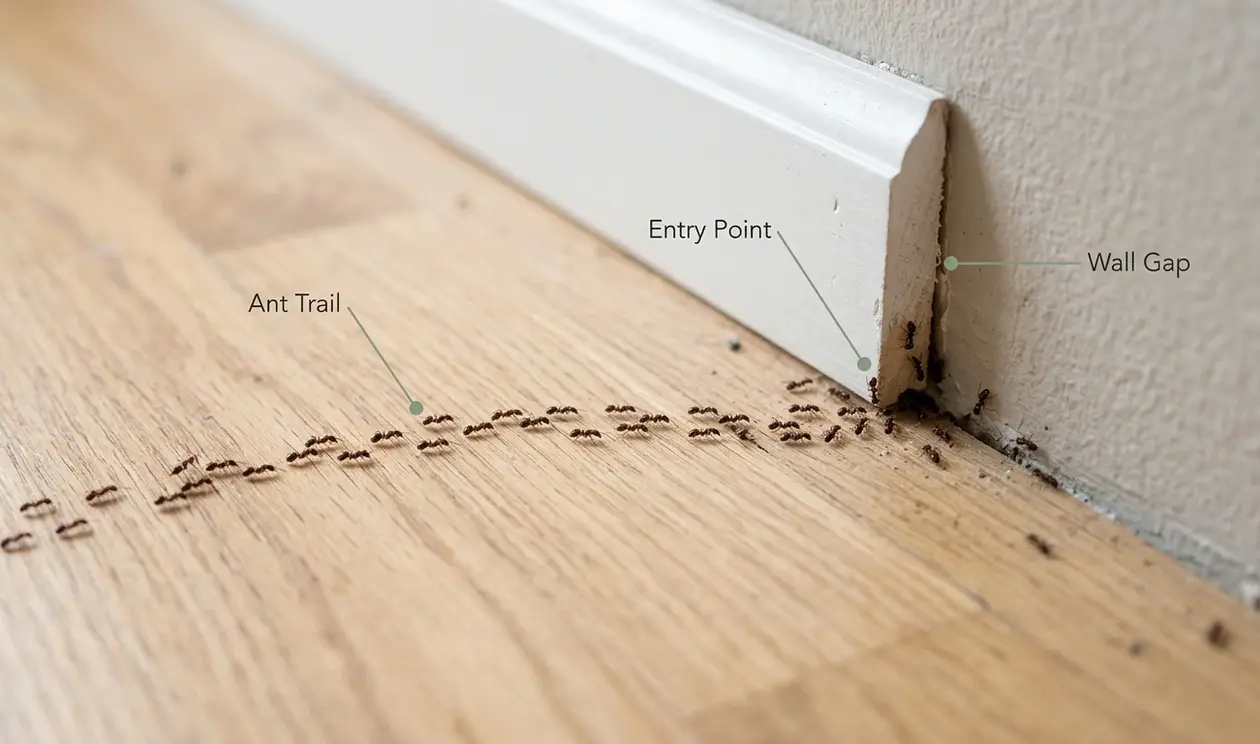
Ants can enter through small openings around window frames, doors, baseboards, and pipes.
Some follow routes along walls and travel behind kitchen cabinets before appearing on the counter.
The colony itself may be outside in the soil, beneath pavement, or somewhere else near the building.
Where Are the Ants Coming From?
The location where you find ants can offer clues about what they’re looking for.
| Where you see ants | Possible attractant or entry route | What to check |
| Kitchen countertop | Sugar, crumbs, food spills | Backsplash, food containers, counter edges |
| Under the sink | Moisture or food residue | Pipe openings, leaks, cabinet floor |
| Pantry shelves | Unsealed food packages | Cereal, sugar, snacks, pet treats |
| Around the refrigerator | Food spills or moisture | Floor beneath appliance, wall gaps |
| Near the dishwasher | Food debris or dampness | Door seals, surrounding floor, plumbing |
| Pet feeding area | Leftover food | Food bowls, storage containers, nearby trails |
| Windowsill | Outdoor entry point | Frame gaps, screens, exterior vegetation |
Rather than assuming every kitchen ant is attracted to sugar, inspect the actual area where they’re active.
How to Get Rid of Ants in the Kitchen in 6 Steps
Most kitchen ant problems are easier to manage when you combine cleaning, inspection, and appropriate control methods.
These steps help address both the ants you see and the conditions bringing them into your kitchen.
Step 1: Follow the Ant Trail Before Cleaning It
When you notice ants moving across the countertop, watch them for a few minutes before wiping them away.
Look at where they’re traveling.
Do they disappear beneath a cabinet? Are they entering through a crack near the window? Are they moving along the edge of the backsplash?
Many ants follow pheromone trails between their nesting area and a food source.
Use a flashlight to trace their path along:
- Countertop edges
- Baseboards
- Cabinet corners
- Window frames
- Plumbing openings
- Spaces behind appliances
If the trail disappears behind a cabinet, you don’t need to dismantle the kitchen.
Make a note of the entry point and look for related activity outside the house if the area is accessible.
Finding the route helps you decide where to clean, monitor, or position an appropriately labeled bait station.
Step 2: Remove Crumbs, Grease, and Sugary Spills
After locating the trail, thoroughly clean the areas where ants have been feeding.
Start with the countertop.
Wipe away crumbs and sticky residue, paying attention to spaces around the toaster, coffee maker, and other appliances.
Move small appliances when practical and check beneath them.
Grease and food residue can accumulate around cooking surfaces, cabinet handles, and kitchen corners.
Use a cleaner suitable for each surface.
Kitchen cleaning checklist:
- Wipe countertops after preparing meals.
- Remove crumbs beneath small appliances.
- Clean sticky spills promptly.
- Wash food containers before recycling them.
- Check beneath the toaster and coffee maker.
- Remove grease residue around cooking areas.
- Vacuum accessible corners and baseboards.
Regular cleaning reduces the food available to ants, but it may not remove an established colony.
If ants keep returning despite improved sanitation, you’ll need to investigate the source further.
Step 3: Check the Pantry, Pet Food, and Trash
The pantry is another common place to find kitchen ants.
Open packages can provide easy access to sugar, cereal, flour-based foods, snacks, and other items.
Inspect containers before placing them back on the shelf.
If you discover ants inside a food package, discard the contaminated food and clean the shelf before restocking.
Transfer frequently used foods into tightly sealed containers.
Glass jars and sturdy plastic containers with secure lids can help protect pantry supplies.
Don’t forget pet food.
Ants may gather around feeding bowls, especially when food is left out for long periods.
Clean the feeding area and remove uneaten food when appropriate for your pet’s feeding routine.
Also inspect the trash can.
Food residue inside the lid, around the rim, or beneath the bag can attract insects even when the container appears closed.
Empty kitchen trash regularly and wash the container when needed.
Step 4: Fix Moisture Problems Around the Sink and Appliances
Ants need water, and some species are attracted to damp areas.
Look beneath the kitchen sink for slow leaks or standing water.
Check around the faucet, garbage disposal, and exposed plumbing connections.
If the cabinet floor feels damp, identify the source rather than simply wiping it dry.
A dishwasher leak or condensation problem near the refrigerator may also create a favorable area for ants.
However, don’t assume every ant near an appliance means it is leaking.
Check for actual signs of moisture.
Repair leaking plumbing, dry accessible surfaces, and keep the area clean.
The UC Integrated Pest Management Program recommends removing crumbs, grease, spills, and water sources as part of managing household ants.
Fixing moisture problems can also make the kitchen less attractive to other household pests.
Step 5: Clean Ant Trails and Use Suitable Bait When Necessary
Once you’ve located the ant trail, remove visible workers with a vacuum or a damp cloth.
Then wipe the trail with mild soapy water.
This helps remove pheromone residue that other workers may use to follow the same route.
Use a cleaning solution suitable for the affected surface, and avoid allowing excess water to reach electrical outlets or appliances.
For occasional ants, cleaning and removing attractants may be enough.
But if a steady trail keeps returning, an ant bait may be needed.
How Do Ant Baits Work?
Ant baits combine a food attractant with an insecticide.
Foraging workers collect the bait and may carry it back to their colony, where it can affect other ants.
Some bait products are deliberately slow-acting so workers have time to return to the nest.
This differs from contact sprays, which generally treat exposed insects rather than the entire colony.
Ant baits don’t work equally well for every species.
Some ants prefer sweet formulations, while others may be attracted to protein or grease-based products.
According to the University of Minnesota Extension, identifying the species and selecting an appropriate bait are important because feeding behavior and nesting habits differ.
Where Should You Put Ant Bait in a Kitchen?
Only use a product specifically labeled for the intended indoor location.
Follow its instructions for placement and handling.
If the label permits, enclosed bait stations can be positioned near active ant routes in areas inaccessible to children and pets.
Keep pesticide products away from:
- Food-preparation surfaces
- Cooking utensils
- Uncovered food
- Children’s belongings
- Pet feeding areas
- Any location prohibited by the product label
Avoid placing pesticide bait directly on countertops used for preparing food unless the label specifically permits that application.
Don’t spray insecticides around active bait stations.
Sprays may interfere with workers collecting bait and carrying it back to the nest.
For additional household pesticide precautions, consult the US Environmental Protection Agency’s pest-control safety resources.
Important: Ant bait may take days or weeks to reduce activity, and some difficult infestations take longer. Follow the label rather than repeatedly switching products after a single day.
Step 6: Seal Entry Gaps and Monitor Ant Activity
After ant activity has decreased, work on limiting future access.
Check the openings you identified while following the original trail.
Common kitchen entry points include:
- Cracks around window frames
- Gaps near plumbing pipes
- Spaces along baseboards
- Openings around exterior doors
- Gaps between wall surfaces and cabinets
Use suitable caulk or weatherstripping where appropriate.
Don’t seal required ventilation or appliance openings.
If ants appear to be nesting inside a wall, sealing one visible hole may simply redirect them. Address the suspected nest before relying on exclusion.
For the following days, keep an eye on the affected area.
If ants return, check whether the trail comes from the same opening or a different location.
What to Do When Ants Appear in Specific Kitchen Areas
The best first step depends on where the ants are gathering.
Ants on Kitchen Counters
Countertops often attract ants because of accessible food residue.
Remove the food source, clean the surface, and follow the trail toward the nearest wall or opening.
Inspect nearby appliances and backsplash gaps.
Avoid applying ordinary household insecticide sprays to food-preparation surfaces.
Ants Inside Kitchen Cabinets
Check for open packages, crumbs, and spills.
Remove food items, clean the affected shelves, and inspect gaps around cabinet backs and corners.
If ants have entered food packaging, discard contaminated products.
Watch where the insects enter the cabinet before applying any treatment elsewhere.
Ants Around the Kitchen Sink
Inspect beneath the sink for dripping pipes, food scraps, and damp surfaces.
Check where the plumbing enters the wall.
Remove any food residue and fix accessible moisture problems.
Recurring activity near a damp wall may require further investigation.
Ants Near the Dishwasher or Refrigerator
Look for accessible food debris, spills, condensation, and moisture around the appliance.
Check the surrounding floor and wall gaps.
Disconnect power and follow the manufacturer’s instructions before moving or inspecting appliances where necessary.
If you suspect an electrical or plumbing problem, consult a qualified technician.
Which Ant Control Methods Are Suitable for a Kitchen?
Kitchen ant control needs extra care because food, utensils, pets, and family members may be nearby.
Here is how common methods compare.
| Method | What it can help with | Important limitation |
| Soapy water | Removing visible ants and scent trails | Won’t eliminate a colony |
| Vacuuming | Removing ants from accessible areas | More workers may return |
| Food storage and cleaning | Reducing food attractants | May not resolve an established nest |
| Moisture control | Removing a potential water source | Doesn’t directly kill ants |
| Enclosed ant bait | Controlling some active colonies | Must be labeled and correctly placed |
| Contact insecticide | Treating exposed ants when permitted | Can interfere with baits and contaminate unsuitable areas |
| Sealing entry gaps | Limiting access | Won’t remove an indoor colony |
| Homemade repellents | Sometimes temporarily disturbing trails | Not dependable colony treatments |
For most kitchen infestations, sanitation and inspection should come first.
If colony treatment is necessary, an appropriately labeled bait is often more useful than repeatedly spraying individual workers.
Does Vinegar Get Rid of Kitchen Ants?
Vinegar may temporarily disrupt ant trails when used to clean compatible surfaces.
However, it doesn’t reliably eliminate an established colony.
Avoid using acidic cleaners on surfaces that can be damaged, including certain natural stone countertops.
Does Cinnamon Keep Ants Out of the Kitchen?
Cinnamon is a popular home remedy, but sprinkling it around cabinets or windows isn’t a reliable way to control an ant infestation.
It may temporarily disturb some ants while leaving the food source and colony untouched.
Should You Use Homemade Ant Poison?
Avoid preparing or leaving unlabeled pesticide mixtures around kitchen food, children, or pets.
Commercial products provide instructions for approved locations, handling, and precautions.
Use only products labeled for your intended treatment.
Why Do Kitchen Ants Keep Coming Back?
If you’ve cleaned your kitchen and still see ants every morning, there may be a colony nearby that remains active.
The workers you remove are only part of that colony.
Other workers can continue searching for food, especially if the nest remains undisturbed.
There are several reasons a kitchen ant infestation may persist.
The Colony Hasn’t Been Controlled
Cleaning and sprays can remove visible ants without affecting the nest.
An established colony may continue sending workers through the same route.
Food Is Still Available
A forgotten spill beneath the refrigerator or pet food left overnight can keep attracting ants.
Check less obvious locations, not just the countertop.
The Bait Isn’t Attractive to the Ants
Different species have different food preferences.
If workers consistently ignore a particular bait, it may not suit their current feeding behavior.
Follow product guidance and consider professional identification before changing treatments.
More Than One Entry Point Exists
Ants may enter through another window gap, plumbing opening, or foundation crack after one route is blocked.
Continue inspecting new trails.
The Ants Are Nesting Indoors
Some species may establish nests inside walls or other concealed spaces.
If the problem continues despite appropriate control, it may be time for a professional inspection.
How to Prevent Ants in the Kitchen
Once you’ve reduced the infestation, a few regular habits can help prevent new activity.
Daily habits
- Wipe counters after preparing food.
- Clean sugary spills and grease.
- Wash dishes and remove food residue.
- Store pantry foods securely.
- Keep pet feeding areas clean.
- Empty trash when needed.
Weekly checks
- Inspect beneath small appliances.
- Check pantry shelves for damaged packages.
- Look beneath the sink for leaks.
- Clean around the trash can.
- Inspect accessible baseboards and window gaps.
Long-term prevention
- Repair plumbing leaks.
- Maintain door and window seals.
- Seal known entry gaps after addressing active nests.
- Avoid storing damp materials against the foundation.
- Keep nearby vegetation from touching the building when practical.
- Monitor areas where ants have appeared before.
Ants are part of the outdoor environment, and completely eliminating them from your property isn’t realistic.
Focus on reducing the conditions that encourage them to enter your kitchen.
When Should You Call a Pest Control Professional?
Most small kitchen ant problems can be managed with inspection, cleaning, and appropriate treatments.
However, some situations deserve professional help.
Consider arranging an inspection if:
- Ants keep returning despite correctly used bait and sanitation.
- Large ants are emerging from wood or wall openings.
- You suspect a nest behind cabinets or inside a wall.
- Ants are appearing throughout several rooms.
- You notice moisture damage near the infestation.
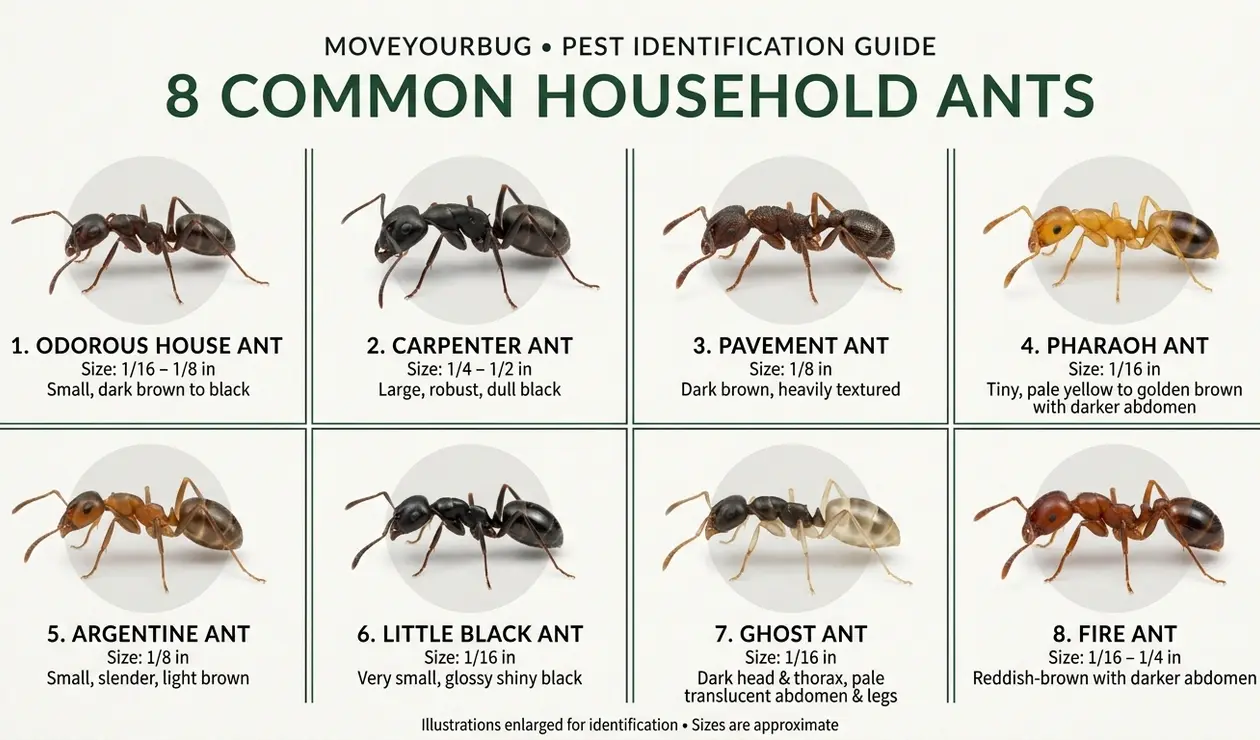
- Very small yellowish ants may be Pharaoh ants.
Correct identification matters. Certain ants, including Pharaoh ants, can be difficult to manage with ordinary household products.
Ask the pest professional to identify the species, explain where it may be nesting, and describe the recommended treatment.
Final Thoughts
Getting rid of ants in the kitchen starts with understanding what brings them inside.
Follow their trail, clean food residue, check pantry storage, and repair moisture problems around sinks and appliances.
For recurring activity, choose an appropriate bait rather than depending on repeated sprays or unproven home remedies.
Once ant activity decreases, seal known entry gaps and keep monitoring the area.
A clean kitchen may not prevent every ant from entering, but removing attractants and addressing the colony can make repeated infestations much less likely.
FAQs:
What is the fastest way to get rid of ants in the kitchen?
Remove visible ants with soapy water, clean food spills, and follow their trail to locate the entry point. Established colonies may need bait.
Why do I suddenly have tiny ants on my kitchen counter?
Ants may have discovered food, water, or an accessible route indoors. Check for crumbs, sugary residue, moisture, and gaps around the backsplash.
Can I use vinegar to kill ants in the kitchen?
Vinegar may temporarily disrupt trails, but it isn’t a reliable way to eliminate an ant colony.
Where should I place ant bait in the kitchen?
Follow the product label. Place approved bait stations near active routes only where permitted, away from food-contact areas and children or pets.
Why do ants keep returning after I clean the kitchen?
The colony may still be active, another entry gap may exist, or hidden food and moisture sources may continue attracting workers.