Quick Answer: “Common household ants can be identified by their size, color, body shape, movement, and nesting habits. Odorous house ants are small and dark, carpenter ants are larger and often found near wood, and pavement ants commonly nest beneath concrete. Pharaoh ants are tiny and yellowish, while fire ants are reddish-brown and known for painful stings. Color alone cannot confirm the species”
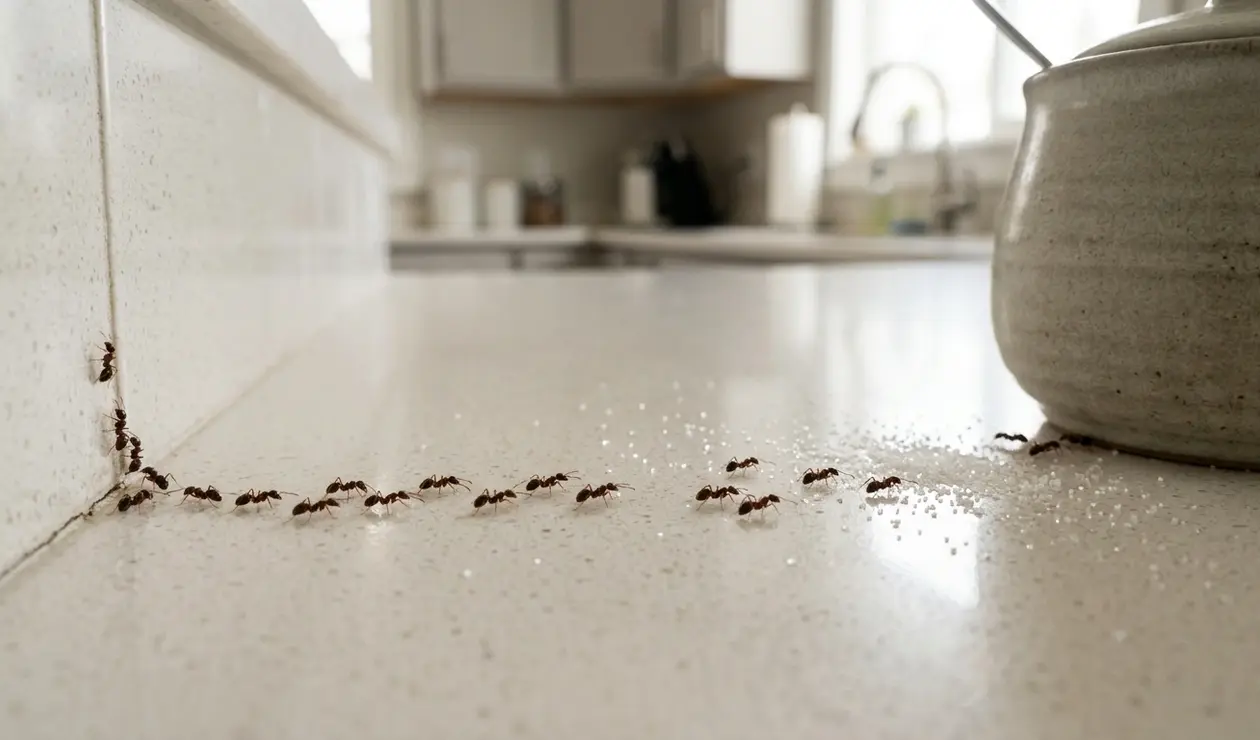
You spot a few tiny black ants near your kitchen sink. By the next morning, there’s a whole line moving along the countertop. But are they pavement ants, odorous house ants, or something else?
Most household ants look surprisingly similar, especially when they’re moving quickly.
That’s why common household ants identification involves more than checking their color. Their size, movement, nesting spots, and food preferences can provide important clues.
Here’s how to recognize eight types of ants commonly encountered in and around American homes.
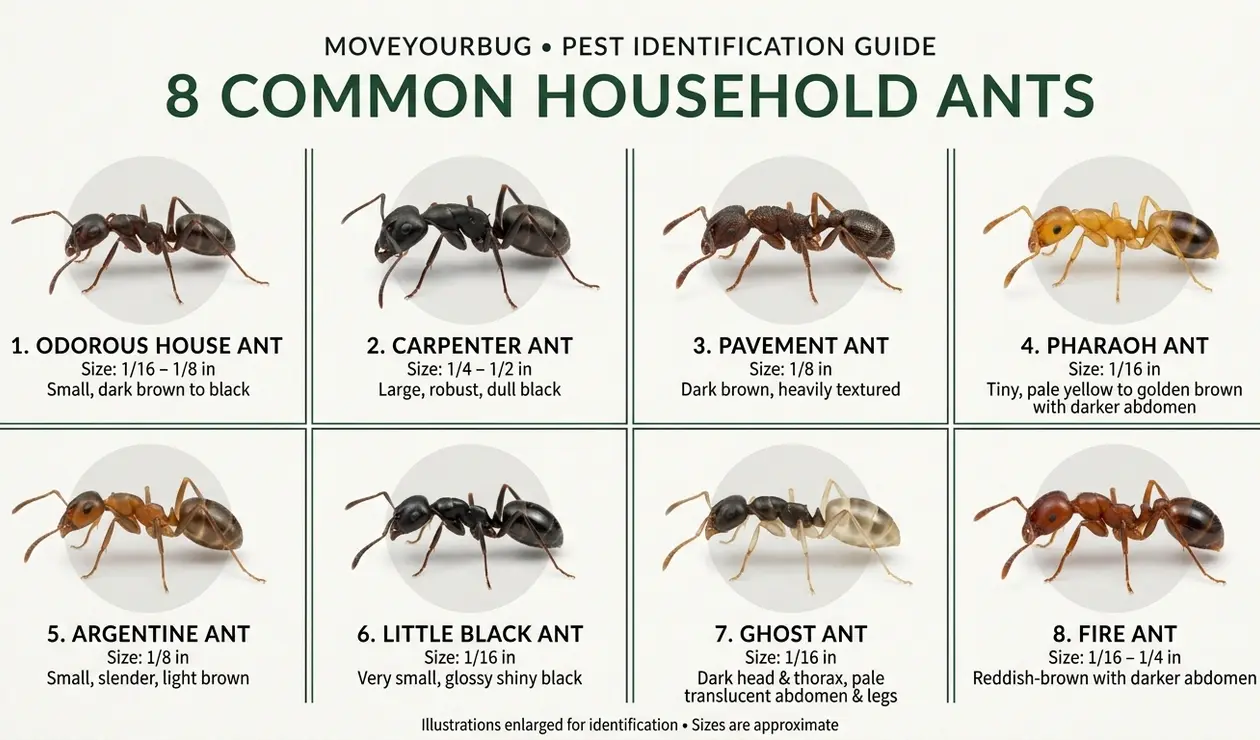
Common Household Ants Identification Chart
Before reaching for an ant spray, compare the insects you’re seeing with this quick reference chart.
| Ant Type | Typical Worker Size | Appearance | Common Clue |
|---|---|---|---|
| Odorous house ant | 1/16–1/8 inch | Dark brown or black | Strong odor when crushed |
| Carpenter ant | 1/4–1/2 inch | Black, brown, or reddish | Found near wood |
| Pavement ant | About 1/8 inch | Brown to black | Nests beneath concrete |
| Pharaoh ant | About 1/16 inch | Pale yellow to light brown | Tiny ants in warm indoor spaces |
| Argentine ant | About 1/8 inch | Light to dark brown | Long, busy ant trails |
| Little black ant | About 1/16 inch | Dark brown to black | Tiny workers around food |
| Ghost ant | About 1/16 inch | Dark head, pale abdomen | Almost transparent-looking rear |
| Fire ant | 1/16–1/4 inch | Reddish-brown | Outdoor mounds and painful stings |
Sizes are approximate and refer to workers. Individual species, castes, and regional populations may vary.
This chart provides an initial match, not a guaranteed identification. Several ants share similar physical characteristics.
8 Common Types of Household Ants
1. Odorous House Ants
Odorous house ants are small, dark brown or black insects frequently seen around kitchen counters, sinks, and baseboards.
Their most recognizable feature is an unpleasant smell, often compared to rotten coconut, released when crushed. However, odor alone isn’t a reliable identification test.
These ants commonly nest beneath stones, mulch, and other sheltered objects. They may also establish colonies inside wall spaces.
They prefer sugary foods, making spilled juice, syrup, and uncovered snacks attractive.
If these insects keep appearing near your food, check our guide on ants in the kitchen for practical ways to address the problem.
2. Carpenter Ants
Carpenter ants are noticeably larger than most common indoor ants. Workers may be black, brown, reddish, or a combination of colors.
Unlike termites, carpenter ants don’t eat wood. They excavate tunnels to create nesting spaces, sometimes inside moisture-damaged structural wood.
Look for large ants near windows, wooden trim, or damp areas. Small piles of coarse wood shavings may indicate nesting activity.
According to Texas A&M AgriLife Extension, carpenter ants are often active at night and may nest in building walls and ceilings.
Repeated indoor sightings deserve attention, especially when accompanied by moisture damage.
3. Pavement Ants
Have you noticed small brown ants moving between cracks in your driveway or sidewalk?
They might be pavement ants.
These ants commonly build colonies beneath concrete slabs, foundations, and paving stones. Workers are usually around 1/8 inch long.
They enter houses searching for crumbs, grease, and other accessible foods.
A steady trail emerging from a floor joint or foundation crack is a useful clue, although it doesn’t confirm the species.
4. Pharaoh Ants
Pharaoh ants are extremely small, usually pale yellow or light brown, with a darker abdomen.
Their tiny size makes them difficult to notice until several workers gather around food or moisture.
They can establish nests in warm indoor spaces, including wall voids, cabinets, and areas near appliances.
Important: Avoid randomly spraying suspected pharaoh ants. Certain insecticide treatments can cause colonies to split into additional nests, making control more difficult.
Professional identification is sensible when these ants repeatedly appear indoors.
5. Argentine Ants
Argentine ants are small, brown insects known for forming extensive colonies and busy foraging trails.
They often nest in moist soil, beneath landscaping materials, or around foundations.
During unusually wet or dry conditions, workers may move indoors searching for suitable shelter and resources.
Unlike ants that travel individually, Argentine ants frequently form noticeable trails containing large numbers of workers.
They are especially troublesome in some warmer regions, including California.
6. Little Black Ants
Little black ants are tiny, dark-colored insects that may appear around kitchen counters, pantry shelves, and outdoor vegetation.
Workers are generally around 1/16 inch long.
They commonly nest outdoors beneath stones, in soil, or around sheltered landscaping areas, although indoor nesting can occur.
Their appearance overlaps with other small dark ants.
If you’re seeing tiny black ants, examine their nesting location and behavior rather than relying on color alone.
7. Ghost Ants
Ghost ants have a distinctive two-toned appearance.
Their heads and upper bodies are darker, while their legs and rear body sections look pale or nearly transparent.
They’re especially associated with warm, humid environments, including Florida and Hawaii.
Inside homes, they may appear near sinks, bathrooms, and food storage areas.
Their pale abdomen is a useful identification clue, particularly when viewed through a magnifying glass.
8. Fire Ants
Fire ants are reddish-brown insects commonly associated with outdoor soil mounds in warmer southern regions.
Worker sizes vary considerably within a colony.
Their most important identifying clue is defensive behavior. Disturbing an active mound can trigger multiple painful stings.
Never touch an unidentified mound to test whether it contains fire ants.
The National Pest Management Association describes their outdoor nesting habits and the risks associated with stings.
If fire ants are active around children’s play areas or frequently used outdoor spaces, consider professional assistance.
How to Identify Ants in Your House
Not sure which species matches your insects? Start with four simple observations.
Check Their Size and Color
Use a magnifying glass or a clear photograph to examine the ants.
Large black ants might suggest carpenter ants, while very small yellowish workers could indicate pharaoh ants.
However, several species share similar colors.
Watch How They Move
Some ants follow organized trails toward food sources. Crazy ants, another household group, are known for unusually rapid, irregular movement.
Observe their behavior before disturbing the trail.
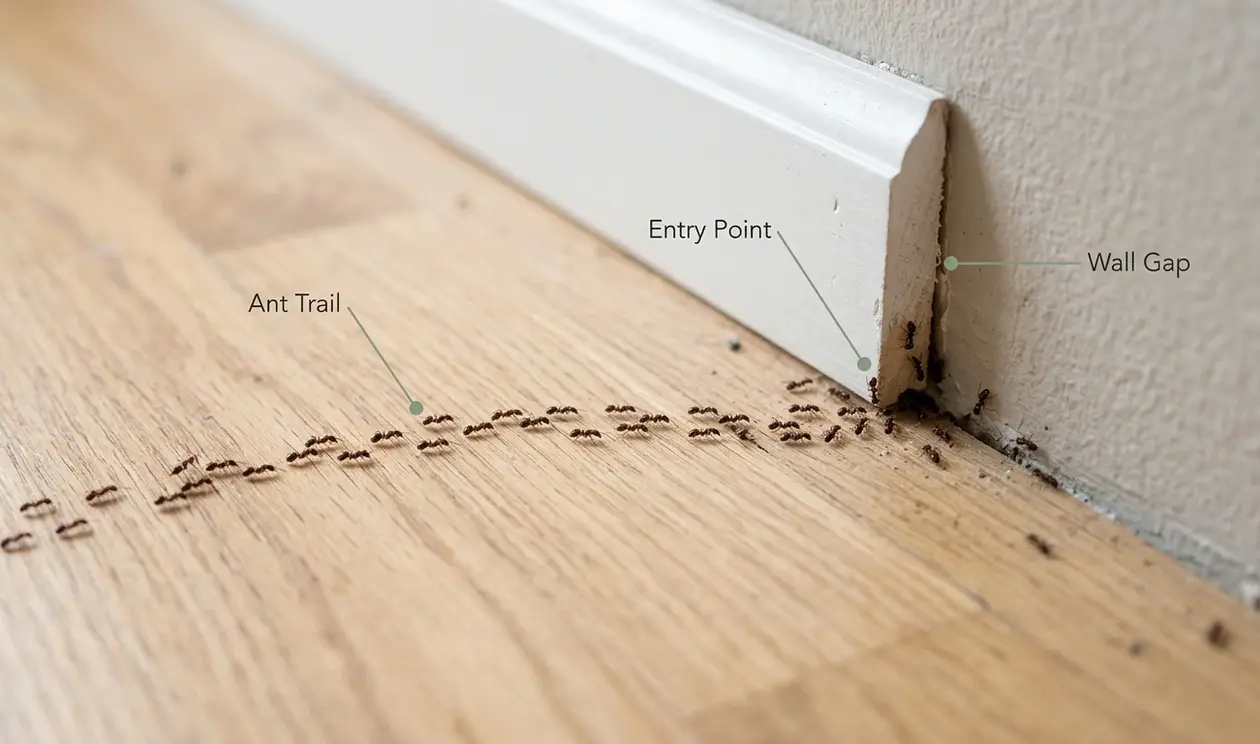
Find Their Nest or Entry Point
Look around window gaps, plumbing openings, foundation cracks, and damp wood.
Ants emerging from pavement may have a different nesting pattern from ants appearing inside wooden walls.
For help dealing with established colonies, read our complete guide to getting rid of ants.
Examine Their Body Shape
Ants have six legs, elbowed antennae, and a narrow waist connecting their body sections.
One useful identification clue is the number of small nodes between the thorax and abdomen. Some ants have one visible node, while others have two.
These features can help narrow down the species, but tiny ants are difficult to examine without magnification. A clear close-up photograph can make identification easier.
Ants vs. Termites: What’s the Difference?
Winged ants are sometimes mistaken for termites, especially during seasonal swarming.
Ants have a narrow waist, bent antennae, and front wings that are longer than their hind wings.
Termites have a broader waist, straighter antennae, and two pairs of wings that are approximately equal in length.
If you find numerous winged insects emerging from wood or walls, arrange an inspection rather than assuming they’re harmless ants.
What Should You Do After Identifying the Ants?
Once you’ve identified the likely ant species, check where they’re entering your home and what’s attracting them.
If you frequently spot ants around countertops, sinks, or food storage areas, our guide on ants in the kitchen explains common causes and practical ways to handle them.
Wipe away food crumbs, store pantry items in sealed containers, and fix leaking faucets or pipes that provide moisture.
Different ant species may require different control methods. Avoid applying pesticides without checking the product label and confirming that it’s suitable for the ants you’re dealing with.
Conclusion
Identifying common household ants starts with observing their size, color, movement, and nesting habits.
A small dark ant near your sink may be an odorous house ant, while larger workers around damp wood could suggest carpenter ants.
Use the identification chart to narrow your options, but don’t rely on appearance alone. Accurate identification helps you choose a more suitable response and avoid unnecessary treatments.
FAQs:
What are the most common ants found inside houses?
Odorous house ants, pavement ants, carpenter ants, and pharaoh ants are frequently encountered indoors, depending on the region.
How can I identify tiny black ants in my kitchen?
Compare their size, movement, and nesting location. Several species look black, so color alone isn’t enough.
Are carpenter ants dangerous to a house?
Carpenter ants can damage wood by excavating nesting galleries, especially when colonies remain active inside structures.
What are the tiny yellow ants in my house?
They could be pharaoh ants, but other pale-colored species look similar. Close examination may be necessary.
How do I tell ants from termites?
Ants have elbowed antennae and narrow waists. Termites generally have straight antennae and broader waists.