Quick Answer: “A sticky fly trap for drain flies can catch adult insects around sinks, showers, and other damp areas. Clear tape and adhesive cards are inexpensive options, while UV light traps may help with larger numbers of flying adults. Homemade vinegar traps are worth trying, but they’re generally more dependable for fruit flies. The important thing to remember is that traps only catch adults. You’ll also need to find and clean the breeding source to stop new drain flies from appearing”
Seeing tiny, fuzzy flies around your bathroom sink is annoying enough. Finding more of them the next morning, even after you’ve cleaned the counter, makes it worse.
You might set out a bowl of vinegar, hang a sticky trap, or try catching them with whatever you have at home. Sometimes you’ll catch a few. Other times, the trap sits there untouched while flies continue resting on your bathroom walls.
That’s because not every fly trap works equally well for drain flies.
These insects spend much of their lives developing in the slimy organic material found inside drains and other damp locations. Catching the adults is useful, but it’s only part of the solution.
Below, we’ll look at four homemade trapping methods, where to place them, and how to figure out why the flies keep returning.
Do Fly Traps Actually Work on Drain Flies?
Yes, fly traps can catch adult drain flies. However, their effectiveness depends on the type of trap, its placement, and whether you’ve correctly identified the insects.
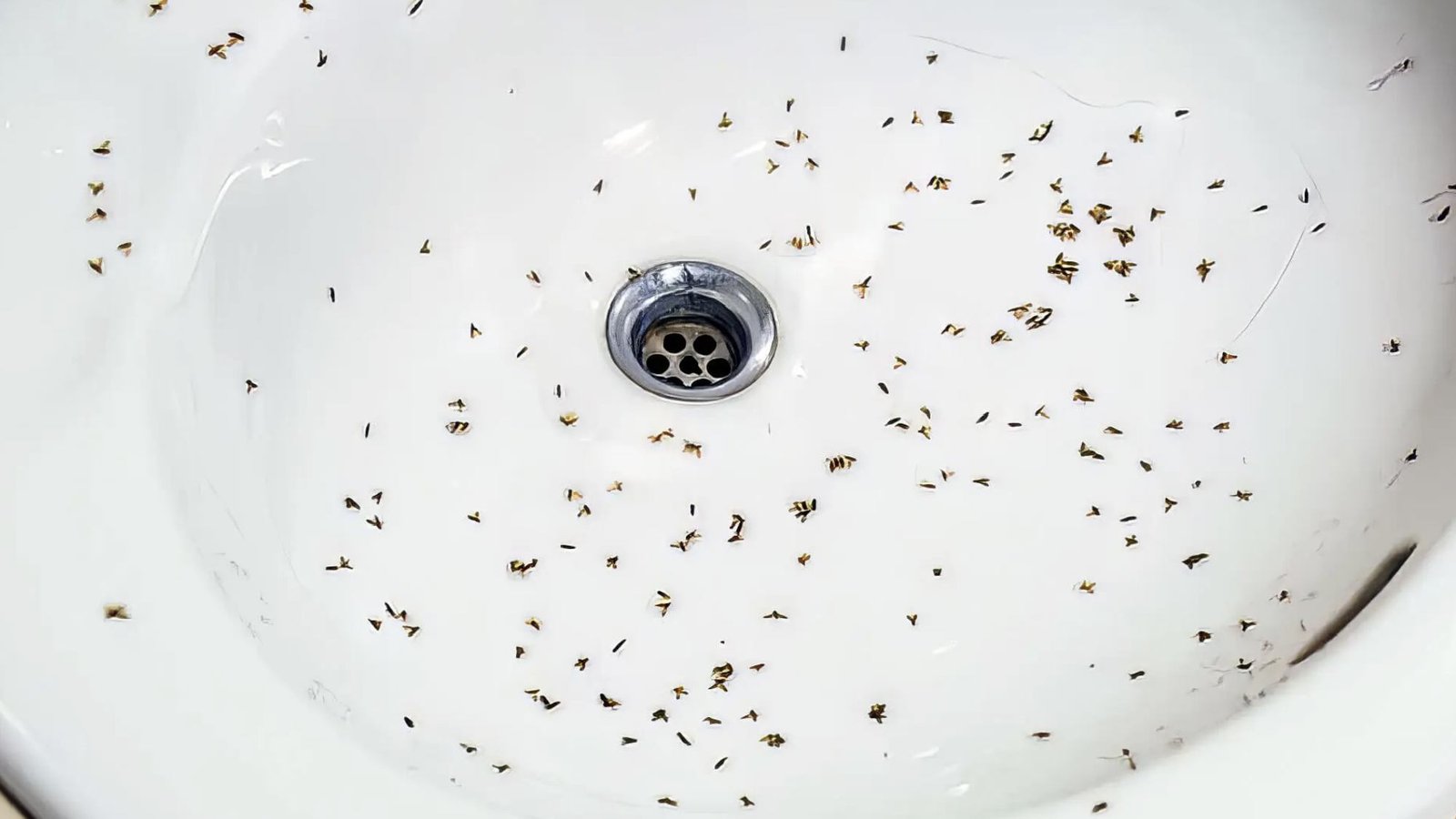
Drain flies, also called moth flies or filter flies, belong to the family Psychodidae. They’re small, fuzzy insects with broad wings that give them the appearance of miniature moths.
Unlike many household flies, they’re weak fliers. You’ll often see them making short flights before settling on nearby walls, bathroom tiles, or the edges of a sink.
These habits make sticky surfaces and appropriately positioned light traps useful for catching adults.
According to Alabama Cooperative Extension’s drain fly management guidance, sticky traps and UV light traps can reduce adult flies, but removing their breeding sites is necessary for lasting control.
The main limitation is that traps don’t reach eggs, larvae, or pupae developing in organic buildup.
A trap may catch several flies tonight while more emerge from the same drain tomorrow.
That’s why it’s worth understanding what each method can and cannot do before making your own trap.
4 DIY Fly Traps for Drain Flies
You don’t need expensive equipment to start monitoring drain flies.
Some effective options use simple adhesive materials. Others use liquid bait, although those homemade mixtures are less predictable for confirmed drain flies.
Here are four methods you can try.
1. Sticky Tape Trap
Best for: Checking whether drain flies are emerging from a particular drain.
The sticky tape method is one of the simplest ways to investigate a suspected breeding source.
You’ll need:
- Clear packing tape
- Scissors
- A flashlight
How to make it:
- Choose a drain where you’ve recently noticed small flies.
- Make sure the drain opening is dry enough for the tape to remain in place.
- Place a strip of clear tape across part of the opening, with the sticky side facing downward.
- Leave a small uncovered gap for airflow rather than sealing the drain completely.
- Leave the tape overnight and inspect it the following morning.
If tiny, fuzzy flies are caught underneath the tape, that drain may be an active emergence site.
You can repeat the test on other suspected drains to narrow down the problem.
Keep in mind that this is mainly a monitoring trap, not a complete infestation treatment. It won’t remove the organic material supporting larvae deeper in the plumbing.
Also, avoid placing tape where it will block normal drainage or be washed away during use.
2. Homemade Sticky Card Trap
Best for: Catching or monitoring adult flies resting near sinks and bathroom walls.
Drain flies often spend time on vertical surfaces close to their breeding areas. A small adhesive card can take advantage of this behavior.
You’ll need:
- A commercially prepared insect glue card
- A small cardboard stand or suitable holder
- A dry location near the suspected source
How to set it up:
- Choose a non-toxic insect monitoring card intended for indoor use.
- Place it upright in a holder or against a protected surface.
- Position it near the area where flies regularly rest.
- Keep the adhesive away from children, pets, and food-preparation surfaces.
- Inspect the card regularly and replace it when it becomes dusty or crowded with insects.
While you can make the stand yourself, using a prepared glue card is more reliable than coating cardboard with random household adhesives.
Some glues don’t remain tacky for long, and others may damage furniture or create unnecessary mess.
A sticky card doesn’t need a food-based attractant to catch insects that happen to land on it.
It’s particularly useful when you want to see whether fly activity is increasing or decreasing over several days.
3. Apple Cider Vinegar and Dish Soap Trap
Best for: Testing whether the insects respond to fermenting bait, particularly when fruit flies may also be present.
Apple cider vinegar traps are popular because they’re inexpensive and easy to prepare.
But there’s an important distinction: vinegar bait is much more closely associated with trapping fruit flies than confirmed drain flies.
You can still try this homemade mixture, provided you understand that results may be limited.
You’ll need:
- ½ cup apple cider vinegar
- 2–3 drops of liquid dish soap
- A small bowl or jar
- Plastic wrap, if desired
How to make it:
- Pour the apple cider vinegar into a small container.
- Add a few drops of dish soap.
- Stir gently without creating excessive foam.
- Set the container near the area where you’ve seen the flies.
- Check the contents the following morning.
Dish soap reduces the liquid’s surface tension, making it more difficult for insects that contact the liquid to remain on the surface.
However, vinegar isn’t a dependable attractant for every species of fly.
If the mixture catches nothing, don’t assume the insects have disappeared. You may have drain flies that aren’t attracted to the bait, or the insects may be coming from another location.
Keep liquid traps away from pets, children, and areas where they could spill.
4. DIY Funnel Bottle Trap
Best for: Trying a simple enclosed liquid-bait trap when the fly species is uncertain.
A funnel bottle trap uses a narrow entrance to make it harder for insects to find their way back out.
Like the vinegar bowl, this design is better established for fruit flies than for drain flies. Consider it an optional experiment rather than a proven drain fly treatment.
You’ll need:
- An empty plastic bottle
- Scissors
- Apple cider vinegar
- A small amount of dish soap
- Tape
How to make it:
- Carefully cut the upper section from the bottle.
- Pour a shallow layer of vinegar into the lower section.
- Add one or two drops of dish soap.
- Turn the bottle’s top upside down to form a funnel.
- Fit the funnel inside the lower section and secure the edges.
- Place the trap on a stable surface near the suspected activity.
Adults attracted to the liquid may enter through the funnel opening.
Some may become trapped inside, but others can escape, and true drain flies may show little interest in the bait.
Handle the cut plastic carefully because the edges can be sharp.
If the bottle catches smooth-bodied flies rather than fuzzy, moth-like insects, take a closer look at the species before continuing treatment.
Sticky Traps vs. UV Light Traps: Which Works Better?
Sticky cards are inexpensive and easy to place in small areas. UV light traps cost more but can attract some flying adults from a wider area.
The better choice depends on where the flies are appearing and how you plan to use the trap.
| Feature | Sticky Traps | UV Light Traps |
|---|---|---|
| Main action | Catch flies that contact adhesive | Attract flying insects with light and capture them |
| Setup | Simple and inexpensive | Requires a suitable device and power source |
| Best location | Near resting or emergence areas | Dry, appropriately positioned indoor locations |
| Maintenance | Replace adhesive cards | Clean device and replace glue boards as directed |
| Main advantage | Useful for localized monitoring | Can capture adults attracted to light |
| Main limitation | Limited capture area | Doesn’t eliminate breeding sites |
| Best use | Small infestations or monitoring | Supplemental adult control |
For indoor pest control, a UV trap with an enclosed glue board is generally preferable to an exposed electric zapper, particularly around food-handling areas.
Follow the manufacturer’s placement and electrical safety instructions. Never install an unsuitable electrical device where it could be splashed by a sink or shower.
Neither method guarantees that every adult fly will be caught.
For many households, starting with an inexpensive sticky trap makes sense before buying a powered device.
Where Should You Place Drain Fly Traps?
Placement can make a noticeable difference.
Drain flies usually remain relatively close to suitable breeding areas, especially when there are places to rest nearby.
Rather than placing traps randomly throughout the house, start where you’ve actually noticed fly activity.
Bathroom sinks: Position a sticky card on a dry surface near the vanity or wall. Check the drain stopper and overflow opening for possible breeding material.
Shower drains: Look for flies resting on shower walls or nearby tiles. Keep adhesive traps away from direct water spray and slippery walking surfaces.
Kitchen sinks: Place traps away from exposed food and preparation areas. Pay attention to the garbage disposal, sink overflow where present, and damp spaces beneath the cabinet.
Basement floor drains: Use a monitoring trap near an accessible floor drain if flies have been appearing in the basement or laundry area.
Utility areas: Check around condensate pans, persistent leaks, and damp storage spaces where organic material may collect.
Don’t assume that a nearby sink is always the source. Adult flies can move away from where they developed.
If you’re investigating several locations, use separate traps and monitor where captures occur.
Why Your Drain Fly Trap Isn’t Catching Anything
A trap with no captured insects doesn’t necessarily mean your home is free of flies.
Before replacing it with another product, consider these common explanations.
You’ve Identified the Wrong Fly
Small flying insects are easy to confuse.
Fruit flies, fungus gnats, phorid flies, and drain flies can all appear around kitchens and bathrooms.
Drain flies have hairy, moth-like wings, while fruit flies are generally smoother and more compact.
Fungus gnats often have longer legs and are associated with damp potting soil.
If you’re uncertain, our guide to the difference between drain flies and fruit flies can help you compare their appearance and breeding habits.
Correct identification matters because attractants that work for one insect may be ineffective for another.
The Trap Is in the Wrong Location
You might place a sticky card beside the kitchen sink while the flies are actually developing in a neglected floor drain.
Try observing where the insects rest throughout the day.
You can also check several suspected openings with clear tape to identify possible emergence points.
Moving a trap closer to consistent fly activity may improve its usefulness.
The Bait Doesn’t Attract Drain Flies
Vinegar, sugar water, and other fermented mixtures don’t reliably attract all small fly species.
If a liquid trap remains empty while fuzzy flies continue appearing, switch to adhesive monitoring instead of adding stronger-smelling bait.
Don’t mix household chemicals in an attempt to make the trap more attractive.
There’s Another Breeding Site
A drain isn’t the only place where these insects can develop.
According to the University of Maryland Extension, potential sources include dirty garbage containers, sewer leaks, condensation pans, and other damp areas containing organic material.
A single overlooked location can continue producing adults even when visible sinks have been cleaned.
If you suspect other small insects around plumbing, our guide to gnats coming from drains explains why identifying the insect and its breeding environment is important.
Why Drain Cleaning Matters Even When Traps Work
A trap can reduce the number of adult flies you see, but it cannot interrupt every stage of their life cycle.
Drain flies undergo four developmental stages:
Egg → Larva → Pupa → Adult
Females lay eggs in suitable damp organic material. The larvae feed on microorganisms and decomposing debris before developing into pupae and emerging as adults.
That material often forms a gelatinous layer, commonly called biofilm, inside drainpipes.
University of Maryland Extension reports that development from egg to adult may take 7–28 days, depending on conditions, and adult drain flies may live for up to two weeks.
This helps explain why new flies can continue emerging even while an adult trap is catching insects.
Virginia Tech’s drain fly guidance recommends removing accumulated organic material through mechanical cleaning. Simply pouring vinegar or bleach into a drain is not considered a reliable way to remove the protected breeding material.
Where accessible, physical cleaning with a suitable drain brush can help remove the buildup. More complicated plumbing problems may require professional attention.
An appropriate enzyme-based drain treatment may help with certain deposits, but effectiveness depends on the product, the condition of the drain, and following label directions.
Avoid pouring boiling water into plumbing that may not tolerate the temperature, and never mix drain cleaners or other household chemicals.
For a complete treatment approach, see our guide on how to get rid of drain flies.
That article covers locating and cleaning breeding sources in more detail.
Final Thoughts
Choosing a fly trap for drain flies doesn’t have to be complicated.
Clear tape is useful for checking suspected drains, while adhesive cards can help catch adults near their resting areas. UV light traps may provide additional control when positioned and maintained correctly.
Homemade vinegar and funnel traps are inexpensive alternatives, but they’re not consistently effective against confirmed drain flies.
If adults keep appearing, don’t keep buying more traps without investigating where they’re coming from.
Focus on finding the source, removing accessible organic buildup, and correcting moisture problems.
A useful trap can tell you where to look and reduce the number of flying adults. Fixing the breeding conditions is what helps keep the problem from returning.
FAQs:
What Is the Best Homemade Trap for Drain Flies?
A clear sticky tape trap can help locate the breeding drain, while adhesive cards catch nearby adults. Vinegar traps are less reliable for drain flies.
Does Apple Cider Vinegar Attract Drain Flies?
It may catch a few, but apple cider vinegar works better for fruit flies. Sticky traps are generally more useful for monitoring drain flies.
Do Sticky Traps Kill Drain Fly Larvae?
No. Sticky traps catch adult flies only. Larvae develop in moist organic buildup, which must be removed to address the breeding source.
How Long Should I Leave Drain Fly Traps Out?
Check tape traps after one night. Keep adhesive cards in place while monitoring activity, replacing them when dirty or no longer sticky.
Why Do Drain Flies Keep Coming Back After Trapping?
Drain flies return when eggs and larvae remain in organic buildup or another damp breeding site. Trapping adults alone won’t stop new flies from emerging.