Quick Answer: “To get rid of gnats coming from drains, first identify the insects and confirm where they’re emerging. Remove the drain stopper, scrub accessible organic buildup with a suitable pipe brush, and address any leaks or standing water. A biological drain cleaner may help remove remaining deposits when used as directed. Sticky traps can catch adults, but they won’t eliminate larvae. If flies continue appearing, inspect other breeding sites or have the plumbing checked.”
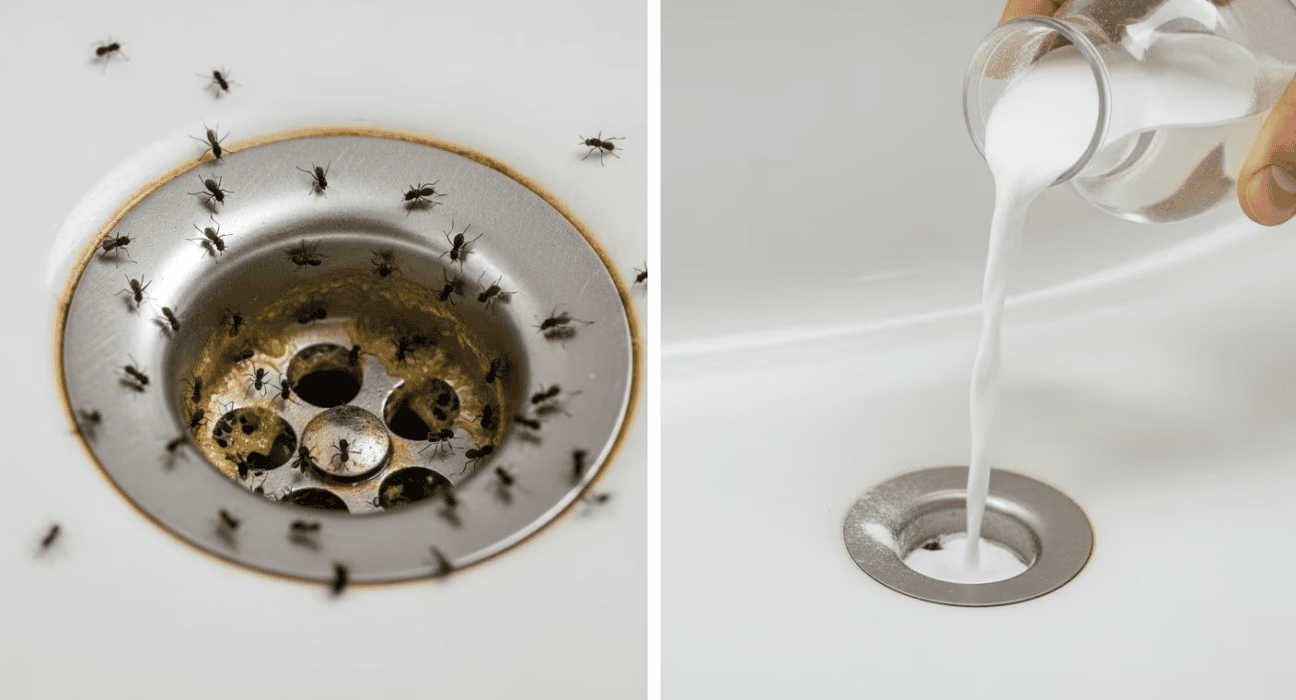
You clean the bathroom sink, wipe down the counter, and take out the trash. Everything looks spotless. Then, the next morning, tiny black flies are back around the drain.
It’s frustrating, especially when you can’t figure out where they’re coming from.
The trouble is that cleaning the visible sink doesn’t always remove what’s hiding farther down the pipe. Organic residue, moisture, and plumbing problems can create suitable breeding conditions for several types of small flies.
If you’re wondering how to kill gnats in drains, the first step isn’t reaching for bleach or another household chemical. It’s figuring out which insect you’re dealing with and finding its breeding source.
Here’s how to investigate the problem and take practical steps to stop it.
Why Are Gnats Coming Out of Your Drain?
A clean-looking sink can still have organic buildup inside its plumbing.
Everyday activities send small amounts of soap residue, food particles, hair, grease, and other debris into household drains.
Over time, some of this material can stick to pipe walls or collect around the stopper and drain opening.
When moisture and microorganisms combine with organic residue, they can form a slimy layer called biofilm.
Certain small fly larvae can develop in this material, feeding on microorganisms and decomposing debris.
However, the word gnat is a general household term rather than the name of one particular species.
Small insects appearing around drains may include drain flies, phorid flies, or fungus gnats. They don’t all have the same breeding habits.
For example, the University of Maryland Extension explains that drain fly larvae develop in gelatinous organic material inside drains and traps. It also notes that fungus gnats can sometimes breed in drains.
Other moisture problems, including wet plant soil and leaking plumbing, may support different fly populations.
That’s why identifying the source matters more than repeatedly spraying the adults.
What Kind of Gnats Are in Your Drain?
Before choosing a treatment, take a closer look at the insects.
| Insect | What it looks like | Common breeding environment |
|---|---|---|
| Drain flies | Small, fuzzy, moth-like wings | Organic slime in drains and damp locations |
| Phorid flies | Small flies with a humpbacked body; often run quickly | Decaying organic material, leaks, damaged drains |
| Fungus gnats | Slender, dark flies with long legs | Moist potting soil and occasionally drains |
| Fruit flies | Compact, tan or brown flies, sometimes with red eyes | Fermenting fruit, food residue, and liquids |
Drain flies are particularly common around bathrooms, floor drains, and neglected plumbing fixtures.
Phorid flies are another possibility. Some species develop in decaying organic matter associated with drains and sewer leaks.
According to the University of Maryland Extension’s phorid fly guidance, unusually large numbers of phorid flies on a building’s ground floor may indicate a damaged drain or sewer line beneath the structure.
Fungus gnats, meanwhile, are often associated with houseplants. If you have several potted plants near your bathroom or kitchen, inspect the soil before assuming the sink is responsible.
If you’re confusing these insects with fruit flies, our article on drain flies vs fruit flies can help you recognize the differences.
How to Kill Gnats in Drains: 5 Practical Steps
Once you’ve narrowed down the likely insect, focus on locating and removing its breeding source.
These steps work best when the problem involves organic buildup inside accessible household plumbing.
Step 1: Confirm the Drain Is the Source
What you’ll need:
- Clear packing tape
- Scissors
- A flashlight
Before cleaning every drain in the house, check whether insects are actually emerging from one.
Start with the sink, shower, or floor drain where you’ve noticed the most activity.
Here’s what to do:
- Choose a drain that won’t be used overnight.
- Dry the area around the opening.
- Place a strip of clear tape across part of the drain, with the sticky side facing downward.
- Leave a small opening rather than sealing the drain completely.
- Check the underside of the tape the following morning.
If small flies become trapped, the drain may be an active emergence site.
You can repeat the test on other suspected drains.
Also inspect the sink overflow opening, if present. This area can accumulate organic residue and moisture.
The tape test helps identify where flies are emerging, but it doesn’t identify the species by itself.
If the trap remains empty, check other possible breeding sources, including houseplants, trash containers, and damp areas beneath sinks.
Step 2: Remove the Drain Stopper and Clean Visible Buildup
Once you’ve identified a suspected drain, begin with the accessible parts.
The stopper and upper drain opening can collect hair, soap residue, and organic sludge even when the sink itself looks clean.
What you’ll need:
- Rubber gloves
- An old toothbrush or suitable cleaning brush
- A container for debris
- Mild dish detergent
- Clean water
Follow these steps:
- Put on gloves before handling the drain.
- Remove the stopper according to the fixture’s instructions.
- Inspect it for accumulated hair, slime, and debris.
- Scrub the stopper and accessible drain opening with a suitable brush.
- Collect and dispose of loosened debris rather than pushing it farther into the pipe.
- Rinse and reinstall the stopper securely.
Pay attention to areas where the stopper sits against the drain body.
These narrow surfaces can collect buildup that ordinary sink cleaning misses.
For fixtures with a difficult or unfamiliar stopper mechanism, consult the manufacturer’s instructions rather than forcing the parts apart.
Removing visible buildup is a useful first step, but it may not address material deeper in the drain.
Step 3: Scrub Accessible Biofilm Inside the Drain
This is often the most important part of treating drain-associated flies.
Adult traps may reduce the number of insects flying around, but they can’t remove larvae developing inside organic deposits.
The University of Minnesota Extension’s household fly guidance recommends removing the gelatinous buildup from affected drains with a stiff brush. It notes that hot water, bleach, and chemical drain cleaners alone are not reliable solutions for moth fly infestations.
For accessible household drains, use a flexible brush designed for the fixture.
Cleaning steps:
- Remove the stopper if you haven’t already.
- Insert a suitable drain-cleaning brush into the accessible section.
- Gently scrub the inner walls to loosen organic residue.
- Withdraw the brush carefully and remove collected debris.
- Repeat where accessible without forcing the brush into bends or fittings.
- Rinse with water at a temperature permitted by your plumbing manufacturer.
Avoid pushing a stiff tool into inaccessible plumbing, especially if you’re unsure about the drain’s construction.
If the sink has a garbage disposal, disconnect its power before attempting any permitted cleaning. Never insert your hands into the disposal chamber.
For difficult clogs or buildup inside concealed plumbing, a plumber may be the safer option.
Why this matters: Removing the organic material deprives developing larvae of the environment they need.
That is more useful than relying on a chemical reaction that only briefly passes through the drain.
Step 4: Consider an Appropriate Biological Drain Cleaner
After physically removing accessible residue, some plumbing systems may benefit from a drain-cleaning product designed to break down organic material.
Enzymatic and microbial cleaners are commonly marketed for this purpose.
They may contain enzymes or microorganisms that act on particular organic deposits.
However, products differ in their ingredients, performance, and plumbing compatibility.
Before using one:
- Read the complete product label.
- Confirm that it is suitable for your drain materials.
- Check septic-system compatibility if your home uses a septic tank.
- Follow the recommended amount and application instructions.
- Allow the stated contact time before using the drain again.
Don’t assume every enzyme cleaner is automatically septic-safe or guaranteed to eliminate insect larvae.
Also, never combine biological cleaners with bleach, acids, ammonia, or other drain treatments.
What About Baking Soda, Vinegar, Bleach, and Hydrogen Peroxide?
These popular household remedies are often recommended for drain gnats, but their effectiveness is frequently overstated.
Baking soda and vinegar: The mixture produces visible fizzing, but that doesn’t mean it reliably removes protected biofilm or kills insects developing inside the drain.
Bleach: It may disinfect surfaces under suitable conditions, but pouring it down the drain doesn’t reliably remove the organic buildup where larvae develop.
Hydrogen peroxide: Bubbling on contact with organic material isn’t proof that a treatment has reached or eliminated all breeding sites.
Boiling water: It can create a scalding hazard, may be unsuitable for certain plumbing fixtures, and doesn’t replace physical cleaning.
Rather than combining multiple household chemicals, focus on source identification and appropriate mechanical cleaning.
Step 5: Catch Remaining Adult Flies and Monitor Activity
Even after cleaning, you may notice adult flies for a while.
Some may have emerged before treatment, while others may be coming from an untreated breeding source.
Sticky monitoring cards are useful for checking whether the number of adults is decreasing.
Place adhesive traps near areas where flies rest, keeping them away from food, children, and pets.
Check the cards regularly and record whether captures are increasing or decreasing.
A small vacuum may also help remove visible adults.
Apple cider vinegar traps can catch some small flies, particularly fruit flies, but they aren’t consistently effective for drain flies or every type of fungus gnat.
For detailed trapping methods, read our guide to making a fly trap for drain flies.
Remember that catching adult insects doesn’t remove eggs or larvae from hidden breeding locations.
Why Do Gnats Keep Coming Back After Cleaning?
If tiny flies continue appearing, the original source may not have been completely addressed.
Here are a few possibilities worth checking.
The Breeding Site Is Deeper in the Plumbing
You may have cleaned the upper drain opening while organic material remains farther down the line.
If the problem continues, consider a professional drain inspection rather than repeatedly pouring chemicals into the sink.
There’s a Leak Under the Sink
Water escaping around a P-trap or drain connection can keep nearby materials damp.
Inspect the cabinet for wet surfaces, odors, and signs of ongoing leakage.
Repairing the leak and removing damp organic debris may be necessary.
The Flies Are Coming From Houseplant Soil
Fungus gnats commonly develop in moist potting media.
Check nearby plants, especially if you see slender insects with long legs.
Allowing appropriate drying between waterings and addressing persistent moisture can help, depending on the plant species.
There’s a Hidden Sewer or Drain Problem
Phorid flies can be associated with damaged sewer lines and accumulations of decaying organic material.
A persistent infestation, especially one involving large numbers of flies emerging from floors or concealed areas, may justify a plumbing inspection.
You’ve Identified the Wrong Insect
Fruit flies, phorid flies, fungus gnats, and drain flies require different control methods.
If repeated drain cleaning isn’t helping, collect a clear photograph or specimen for identification rather than assuming the treatment needs to be stronger.
How to Prevent Gnats From Returning to Your Drains
Once you’ve addressed the source, regular maintenance can help prevent another problem.
Keep drain openings clean. Remove accessible food debris, hair, and soap residue before thick deposits accumulate.
Fix leaks promptly. Inspect plumbing beneath sinks and around drain connections for persistent moisture.
Address slow drainage. Standing water or recurring clogs may indicate an underlying buildup or blockage.
Maintain unused P-traps. Run water periodically in infrequently used fixtures to restore the water seal and help prevent sewer gases from entering the home. The necessary frequency depends on conditions.
Check household humidity. Use bathroom ventilation and repair moisture problems that leave surfaces damp.
Monitor nearby houseplants. Avoid keeping potting soil continuously wet when the plant doesn’t require it.
Follow product instructions. If you use a biological drain cleaner for maintenance, select one appropriate for your plumbing rather than assuming every product is safe for every system.
Regular cleaning can reduce suitable breeding conditions, although it cannot guarantee that small flies will never appear again.
Final Thoughts
Knowing how to kill gnats in drains starts with identifying the insect and finding the source of the problem.
For drain-associated flies, removing organic buildup is often more useful than relying on vinegar, bleach, or other household mixtures.
Start with the tape test, clean accessible plumbing surfaces, correct moisture problems, and monitor remaining adult activity.
If the flies keep returning despite these steps, look beyond the visible drain. Hidden leaks, damp houseplant soil, damaged plumbing, or another breeding site may be responsible.
The goal isn’t simply to catch the flies you see. It’s to remove the conditions allowing new ones to develop.
FAQs:
Can bleach kill gnats in drains?
Bleach isn’t a reliable long-term solution because it doesn’t remove the organic buildup supporting larvae. Physical cleaning and source removal are more effective.
Does baking soda and vinegar kill drain gnats?
There’s insufficient evidence that this mixture reliably eliminates larvae inside drain biofilm. Cleaning the breeding material is the better approach.
How long does it take to get rid of gnats in drains?
There’s no fixed timeline. Results depend on the insect species, infestation size, and whether all breeding sources have been removed.
Can fungus gnats breed inside drains?
Yes, under suitable conditions. However, they’re more commonly associated with moist potting soil, so nearby houseplants should also be inspected.
Why are tiny black flies coming out of my bathroom sink?
They may be drain flies, phorid flies, or other small insects associated with moisture and organic material. Identify the flies and check the drain before treating it.