Quick Answer: “To unclog a shower drain, start by removing the drain cover and pulling out visible hair and debris. If water still drains slowly, try a cup plunger or a plastic hair-removal tool. A manual drain snake can help reach deeper blockages. Avoid mixing chemical cleaners or pouring boiling water into unknown plumbing. If the shower remains clogged after these steps, a plumber may need to inspect the drain.”
There’s nothing quite as annoying as finishing a shower and realizing you’re standing in a puddle of dirty water. You wait for it to drain, but the water barely moves.
In many cases, the problem starts with something ordinary: hair, soap residue, or debris collecting just below the drain cover.
Over time, that buildup can restrict water flow, leave unpleasant odors, and make your shower harder to clean.
The good news is that you don’t always need a plumber for a minor blockage.
Knowing how to unclog a shower drain with the right tools can help you clear accessible clogs without relying on harsh chemicals.
Below are five practical steps, starting with the simplest method and moving toward deeper blockages.
What Causes a Shower Drain to Clog?
Most shower clogs develop gradually.
Hair washes into the drain, where it can catch on rough surfaces or existing debris. Soap residue, skin oils, and other material then accumulate around it.
Eventually, the mixture restricts water flow.
The most common causes include:
- Hair buildup: Loose strands become tangled inside the drain.
- Soap scum: Soap residue combines with minerals and body oils to form deposits.
- Hard water minerals: Mineral buildup can contribute to restricted drainage.
- Foreign objects: Small items may accidentally fall through the drain cover.
- Deeper plumbing blockages: Problems farther along the drain line can prevent water from flowing normally.
According to the UK’s WaterSafe plumbing guidance, hair, soap buildup, mineral deposits, and foreign objects are common causes of shower drain blockages.
A slowly draining shower doesn’t automatically mean there’s a serious plumbing problem.
However, if several household drains are backing up at the same time, the blockage may be farther down the shared plumbing system.
Before You Start: Check the Drain and Gather Your Tools
A little preparation can make the job cleaner and safer.
You may need:
- Rubber gloves
- A flashlight
- A screwdriver
- A plastic hair-removal tool
- A cup plunger
- A manual drain snake
- A bucket and old towels
Start by checking whether the shower contains standing water.
If water has collected several inches deep, remove some with a small container so you can access the drain safely.
Important: If you’ve already poured a chemical drain opener into the shower, don’t plunge, snake, or add another product. Contact a plumber and explain which cleaner was used.
Chemical residue can splash during mechanical cleaning and cause serious injuries.
Once the work area is ready, begin with the least invasive method.
How to Unclog a Shower Drain in 5 Easy Steps
The following methods cover common household clogs, including hair near the opening and debris lodged deeper in the drainpipe.
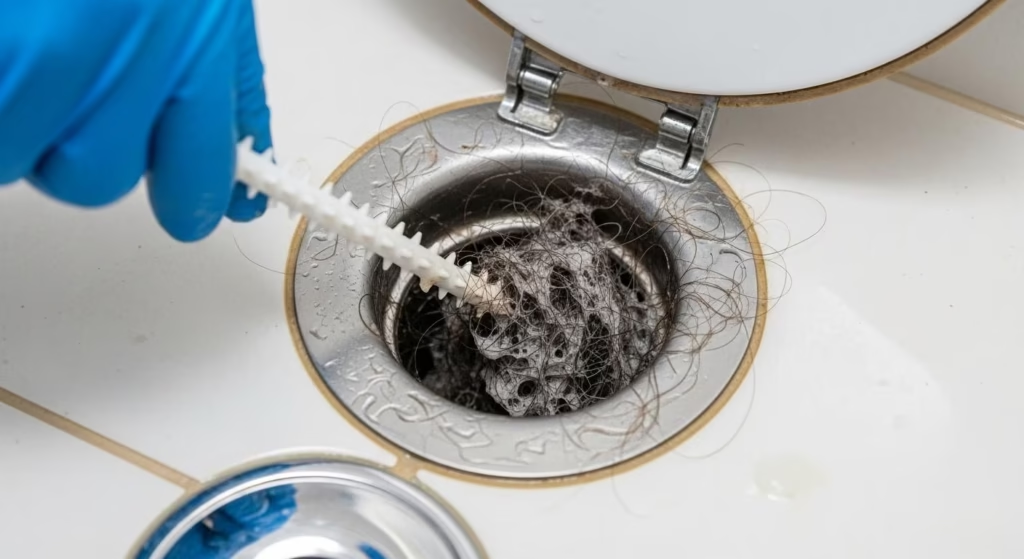
Step 1: Remove the Drain Cover and Pull Out Visible Hair
Best for: Hair clogs close to the drain opening.
The first place to check is directly beneath the drain cover.
Hair often gets caught around the grate or stopper assembly, creating a tangled mass that gradually collects soap residue.
You may be able to remove it without using a plunger or snake.
What to do:
- Put on rubber gloves.
- Remove the drain cover according to its design.
- Use a flashlight to inspect the visible opening.
- Carefully pull out accessible hair and debris with a suitable plastic removal tool.
- Collect the material in a trash bag rather than washing it farther down the pipe.
- Rinse the accessible area and test the water flow.
If the blockage is slightly below the surface, a flexible plastic hair-removal strip may help.
These tools are designed to catch hair and pull it upward.
Avoid forcing sharp metal objects into the pipe. Improvised hooks can scratch finishes, damage fittings, or become stuck.
Once the visible material is removed, run a small amount of water.
If the shower drains normally, you may have solved the problem without moving to another method.
Step 2: Try a Cup Plunger for Standing Water
Best for: A shower drain clogged with standing water or a blockage that doesn’t come out by hand.
A plunger uses changes in water pressure to loosen an obstruction.
For a shower drain, a standard cup plunger is usually more suitable than a toilet-style flange plunger.
The key is creating a good seal around the opening.
Follow these steps:
- Remove the drain cover if necessary.
- Position the cup plunger directly over the drain.
- Make sure there’s enough water to cover the rim of the plunger cup.
- Press gently to release trapped air and establish a seal.
- Move the handle up and down firmly for about 20 seconds.
- Lift the plunger and check whether the water begins draining.
Repeat a few times if necessary.
If your shower is part of a bathtub combination, you may need to cover the overflow opening to maintain pressure.
Be careful not to use excessive force on fragile or older plumbing.
The Home Depot shower drain guide also describes using a cup plunger and enough water to cover its rim.
If the water begins moving normally, replace the cover and test the shower.
If the drain remains blocked, a tool that reaches farther into the pipe may be needed.
Step 3: Use a Plastic Drain Tool or Manual Snake
Best for: Hair and debris lodged farther below the drain opening.
A plastic drain-cleaning strip is useful for relatively shallow clogs.
For deeper obstructions, a manual plumber’s snake, also called a drain auger, may help.
These tools reach into the drain and either catch debris or break up a blockage.
How to use a manual drain snake:
- Put on gloves and remove the drain cover.
- Slowly feed the cable into the drain.
- Stop when you encounter resistance.
- Gently rotate the handle according to the tool’s instructions.
- Withdraw the cable slowly, removing any attached debris.
- Dispose of the material in the trash.
- Run water to check whether the blockage has cleared.
Don’t force the cable around sharp bends or through unusually strong resistance.
A drain snake can catch on fittings or damage plumbing when used incorrectly.
If the cable won’t advance, stop rather than applying more pressure.
Also, remember that a manual snake and a powered drain-cleaning machine aren’t the same thing.
Powered equipment requires additional skill and safety precautions.
For an ordinary household shower, starting with a simple manual tool is usually more appropriate.
Step 4: Clean Remaining Residue and Check Water Flow
Best for: Mild soap residue after the main blockage has been removed.
After clearing hair or other debris, you may still notice slightly sluggish drainage.
Remaining soap scum and loose material could be contributing to the problem.
Start by rinsing the accessible drain with hot tap water, provided the temperature is suitable for your plumbing and fixture.
Use a brush designed for drain cleaning where accessible.
Does Baking Soda and Vinegar Unclog a Shower Drain?
Baking soda and white vinegar are frequently recommended as a homemade drain-cleaning mixture.
When combined, they react and produce carbon dioxide bubbles.
That fizzing action may help disturb some loose material, but it doesn’t reliably dissolve a compact hair clog.
For stubborn obstructions, manual removal, plunging, or an appropriate drain snake is generally more dependable.
If you choose to try a mild household cleaning mixture, only do so when there are no chemical drain openers or other incompatible substances in the drain.
Don’t seal the drain tightly to build pressure, and don’t combine vinegar with bleach or other cleaning chemicals.
Avoid pouring boiling water into unknown plumbing, plastic fittings, or fixtures that may be damaged by extreme heat.
A useful rule: If the drain is completely blocked by a dense clump of hair, cleaning liquids aren’t a substitute for physically removing the obstruction.
Step 5: Prevent Another Shower Drain Clog
Best for: Maintaining normal drainage after the blockage is cleared.
Once your shower drains properly, a few simple habits can reduce the amount of debris entering the pipes.
You don’t need a complicated cleaning routine.
Focus on keeping hair and residue from accumulating.
Install a Hair Catcher
A removable hair catcher can prevent loose strands from entering the drain.
Choose one that fits your shower and doesn’t significantly restrict normal water flow.
Empty it regularly and wash away accumulated soap residue.
Clean the Drain Cover
Remove accessible hair and debris before a large buildup forms.
Check the cover periodically, particularly if several people use the same shower.
Watch for Slow Drainage
A shower that takes longer than usual to empty may be developing another blockage.
Addressing it early is easier than waiting until several inches of standing water collect.
Use Appropriate Cleaning Products
If you use a biological or enzymatic drain-maintenance product, follow the manufacturer’s directions and verify compatibility with your plumbing.
The American Cleaning Institute’s home cleaning guidance includes biological drain openers among maintenance options for reducing buildup.
No drain-maintenance product guarantees that hair clogs will never occur.
Which Shower Drain Unclogging Method Should You Choose?
The best method depends on the type and location of the blockage.
| Drain problem | Method to try first | Next step if unsuccessful |
|---|---|---|
| Hair visible near the opening | Remove hair manually | Plastic hair-removal strip |
| Standing water in the shower | Cup plunger | Manual drain snake |
| Hair deeper in the drain | Manual drain snake | Professional inspection |
| Mild soap residue | Accessible cleaning and hot tap water | Check for a hidden clog |
| Multiple drains backing up | Stop using affected fixtures | Contact a plumber |
| Recurring blockage | Inspect for trapped debris | Have the line examined |
This approach helps you avoid using tools or treatments that aren’t suited to the problem.
For example, a cup plunger may loosen a soft blockage, but it won’t necessarily remove a large wad of hair tangled around a fitting.
Similarly, a drain snake can retrieve material deeper in the pipe, but it shouldn’t be forced through unknown obstructions.
Can a Clogged Shower Drain Cause Drain Flies?
Sometimes.
Hair, soap residue, and other organic material can collect inside a slow-draining shower.
When damp organic buildup supports microorganisms, it may also provide suitable conditions for drain fly larvae.
However, a clogged shower doesn’t automatically mean drain flies are present, and these insects can breed in other damp areas without a major clog.
Drain flies are tiny, fuzzy insects that resemble miniature moths.
If you’re noticing small flies resting near your shower walls or drain cover, our guide on how to get rid of drain flies explains how to identify and address their breeding locations.
If the insects look more like slender black gnats, you can also check our article on how to kill gnats in drains.
Clearing a physical blockage may improve drainage, but pest control can require additional inspection of moisture and organic buildup.
Why Does My Shower Drain Smell Bad After Unclogging?
A clogged shower drain may produce unpleasant odors when hair, soap residue, and other material accumulate.
Even after the main obstruction is removed, some organic deposits can remain.
However, not every sewer-like odor is caused by a clog.
Other possibilities include:
- A dry P-trap in an infrequently used shower
- Persistent organic buildup inside the drain
- Plumbing leaks
- Venting problems
- Damaged drain or sewer connections
A P-trap is the curved section of plumbing that retains water to help prevent sewer gases from entering the home.
If the water seal evaporates, odors may escape through the drain.
For more detailed troubleshooting, read our guide on why a shower drain smells like sewage.
Persistent sewer odors, gurgling noises, or repeated backups should be checked by a qualified plumber rather than treated with additional household chemicals.
When Should You Call a Plumber?
Many simple hair clogs can be cleared at home, but not every drainage problem should be handled as a DIY project.
Professional help is appropriate when:
- Water backs up through multiple household fixtures.
- The shower repeatedly clogs after cleaning.
- A manual snake won’t advance safely.
- You suspect damaged pipes or a sewer-line problem.
- Water leaks appear around walls, ceilings, or flooring.
- Strong sewer odors continue after basic troubleshooting.
- Chemical drain openers are present and the blockage remains.
A persistent blockage may involve a problem beyond the area reachable with ordinary household tools.
Continuing to force a snake or repeatedly pouring chemicals into the drain can make the situation more dangerous or expensive.
Final Thoughts
Understanding how to unclog a shower drain starts with finding the type of blockage you’re dealing with.
Hair near the opening may only require a simple removal tool. Standing water might respond to a cup plunger, while deeper obstructions may need a manual drain snake.
Start with the easiest method and avoid unnecessary chemical treatments.
Once the water flows normally, install a hair catcher, remove buildup regularly, and address slow drainage before it becomes a complete blockage.
If the problem continues or several fixtures are affected, a professional inspection is the safer next step.
What is the fastest way to unclog a shower drain?
Remove the drain cover and pull out visible hair first. For deeper clogs, use a cup plunger or a suitable manual drain snake.
How do I unclog a shower drain with standing water?
Remove excess water if necessary, then use a cup plunger to loosen the blockage. A manual drain snake may help if plunging fails.
Can baking soda and vinegar unclog a shower drain?
The mixture may help loosen minor residue, but it doesn’t reliably dissolve dense hair clogs. Mechanical removal is usually more dependable.
Can I unclog a shower drain without a snake?
Yes. Try removing accessible hair with a plastic drain tool or using a cup plunger. Deeper blockages may require a snake or plumber.
How often should I clean my shower drain?
Empty the hair catcher regularly and remove accessible buildup when needed. The ideal cleaning frequency depends on how often the shower is used.