Quick Answer: “Baking soda and vinegar create a fizzing reaction, but there’s no strong evidence that this mixture reliably kills drain flies, their eggs, or larvae inside plumbing. Drain flies breed in moist organic buildup called biofilm, which a brief foaming reaction may not remove. To address an infestation, locate the breeding drain, physically clean accessible buildup, and correct moisture problems. Sticky traps can help catch adults while you deal with the source.”
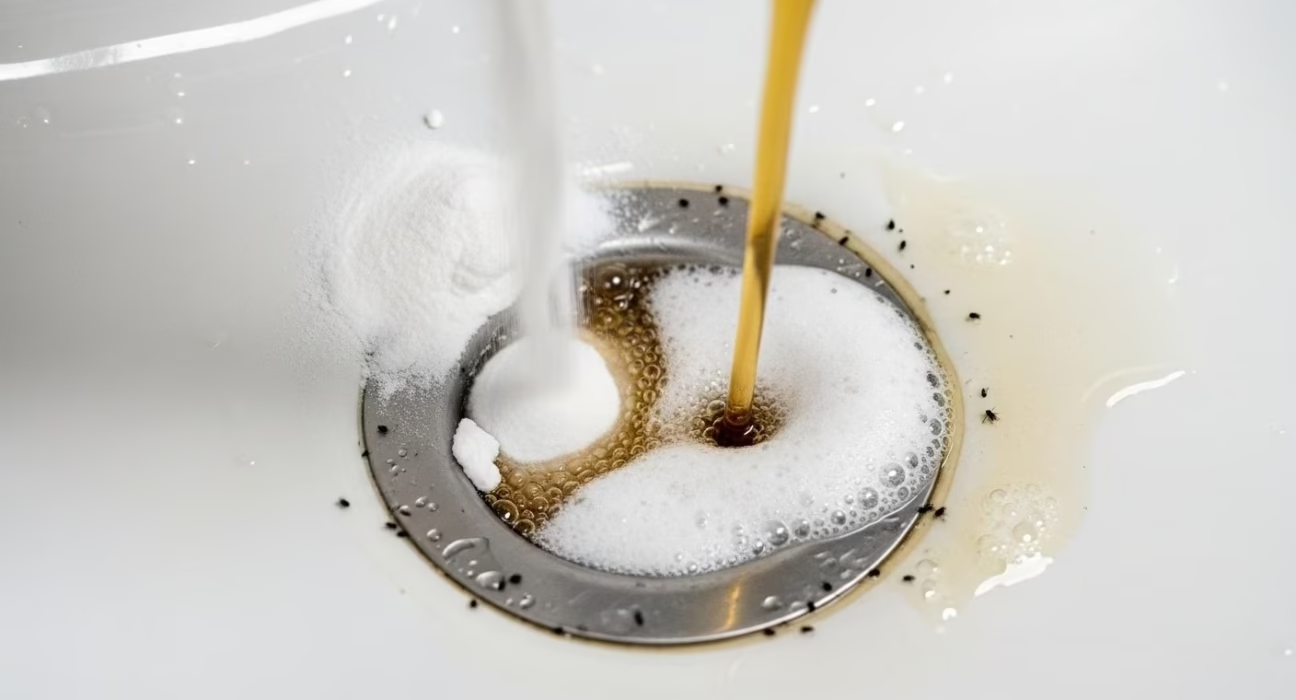
You’ve probably seen the advice before: pour baking soda down the sink, add vinegar, and let the fizzing mixture take care of those annoying little flies.
It sounds simple enough. Both ingredients are inexpensive, and most households already have them in the kitchen.
But what happens when the flies keep coming back?
The problem is that drain flies don’t simply live in the water flowing through your pipes. Their larvae develop in moist organic material that can cling to drain surfaces.
That makes the popular drain flies baking soda and vinegar method less dependable than it might appear.
Before trying another homemade treatment, it helps to understand what the mixture actually does, why drain flies return, and which steps make a difference.
Does Baking Soda and Vinegar Kill Drain Flies?
Not reliably.
Mixing baking soda and vinegar produces bubbles, but bubbling isn’t proof that the mixture has reached or destroyed drain fly eggs and larvae.
Baking soda is sodium bicarbonate, a mildly alkaline substance. Household white vinegar contains acetic acid.
When they react, they produce carbon dioxide gas, water, and sodium acetate.
The carbon dioxide creates the familiar fizzing effect.
Although the reaction can disturb some loose residue, it doesn’t reliably dissolve the thick organic deposits that support drain fly larvae.
It also doesn’t establish that every insect developing inside a drain has been killed.
The University of Minnesota Extension’s household fly guidance recommends removing the gelatinous buildup with a stiff brush or using an appropriate biological drain cleaner.
The same guidance explains that pouring hot water, bleach, or chemical drain cleaners into a drain isn’t an effective substitute for removing the breeding material.
So, if you’re trying to stop an active infestation, cleaning the source matters more than creating a strong-looking chemical reaction.
Why Drain Flies Keep Coming Back
Drain flies belong to the insect family Psychodidae. They’re also called moth flies and filter flies because of their fuzzy bodies and broad wings.
You may notice them resting on bathroom walls, near shower drains, or around a kitchen sink.
Their appearance often seems sudden, but the infestation may have been developing inside a damp area for some time.
Drain Fly Larvae Live in Organic Biofilm
Household drains can collect hair, soap residue, food particles, grease, and other organic material.
Microorganisms grow on these deposits, creating a slimy layer known as biofilm.
Drain fly larvae develop within suitable moist organic material, feeding on bacteria, fungi, algae, and decomposing matter.
The University of Maryland Extension’s drain fly guide explains that drain fly development from egg to adult can take approximately 7–28 days, depending on conditions.
It also reports that adults may live for up to two weeks.
Once breeding is established, new adults can emerge regularly.
That’s why killing a few visible insects doesn’t necessarily stop the problem.
Common Drain Fly Breeding Locations
Drain flies aren’t limited to kitchen sinks.
They may develop in:
- Bathroom sink and shower drains
- Basement floor drains
- Plumbing traps containing organic buildup
- Dirty garbage containers
- Condensate pans
- Areas affected by sewer leaks or backups
A drain that looks clean around the opening may still contain organic deposits farther inside.
Finding the actual breeding source is necessary before choosing a treatment.
What Happens When You Mix Baking Soda and Vinegar?
The reaction between baking soda and vinegar is easy to observe.
When the two ingredients come into contact, they produce carbon dioxide bubbles that rise through the liquid.
This is a normal acid-base reaction.
However, several popular claims about using the mixture inside household plumbing are misleading.
| Common claim | What you should know |
|---|---|
| The foam kills drain fly larvae | Not reliably demonstrated |
| The reaction removes all drain biofilm | No dependable evidence supports complete removal |
| Adding salt makes the mixture stronger | Salt doesn’t reliably scrub pipe walls when simply poured down a drain |
| Leaving the mixture overnight kills more flies | Longer contact doesn’t establish effective larval control |
| Boiling water finishes the treatment | Hot water alone isn’t a reliable way to eliminate drain fly breeding sites |
| Monthly vinegar treatments prevent infestations | No guaranteed prevention benefit |
The main issue is access.
Larvae may develop within organic material attached to pipe surfaces, beyond where a household mixture can reach effectively.
A brief chemical reaction doesn’t necessarily remove those deposits.
For that reason, baking soda and vinegar shouldn’t be the main treatment for a confirmed drain fly infestation.
How to Check if Drain Flies Are Breeding in Your Drain
Before attempting to clean every sink in the house, find out where the insects are emerging.
A simple tape test can help.
Step 1: Choose a Suspected Drain
Start where you’ve seen the most fly activity.
This might be a bathroom sink, shower, or floor drain.
Look for tiny, fuzzy insects resting on nearby surfaces.
Step 2: Place Clear Tape Over Part of the Opening
Use transparent packing tape with the sticky side facing downward.
Cover part of the drain opening without sealing it completely.
Choose a drain that won’t be used overnight.
Step 3: Inspect the Tape the Next Morning
Check whether small flies have become stuck to the underside.
If you find drain flies, the opening may be an active emergence site.
The University of Maryland Extension’s household insect identification guide identifies these insects as small, gray, fuzzy, moth-like flies commonly found around bathroom drains and sinks.
Repeat the test on other suspected drains if necessary.
A positive result helps locate the problem, but you should still inspect the insect’s appearance to confirm its identity.
If you need a more detailed treatment plan, see our guide on how to get rid of drain flies.
What Actually Works Better Than Baking Soda and Vinegar?
Once you’ve located the breeding source, focus on removing the organic material supporting the insects.
You don’t need to try several chemical mixtures at once.
Start with accessible cleaning and investigate deeper plumbing problems if necessary.
1. Remove Visible Debris
Put on rubber gloves and inspect the drain opening.
Depending on the fixture, you may be able to remove the stopper and clean accumulated hair, soap residue, or food debris.
Use a suitable brush and collect the loosened material for disposal.
Avoid forcing tools into unfamiliar plumbing components.
2. Physically Clean Accessible Biofilm
A flexible drain brush can help remove sludge attached to accessible pipe surfaces.
Gently scrub the buildup and remove debris as you work.
Mechanical cleaning is important because drain fly larvae depend on suitable organic material for development.
Don’t assume that a single cleaning session has reached every possible breeding location.
If the affected area is deep inside the plumbing, professional cleaning may be necessary.
3. Consider an Appropriate Biological Drain Cleaner
Some enzyme-based or microbial products are designed to break down particular organic deposits.
They may be useful as supplemental cleaning products, depending on the buildup and the manufacturer’s instructions.
Choose a product suitable for your plumbing materials.
If you have a septic system, check the label for compatibility.
Don’t assume that every biological cleaner is automatically safe for every plumbing system or that it kills insect larvae directly.
4. Monitor Remaining Adult Flies
Cleaning the breeding material doesn’t necessarily remove adults already flying around your bathroom.
Sticky adhesive cards can help monitor and temporarily reduce adult activity.
Clear tape can also help identify an active emergence point.
Apple cider vinegar traps are more commonly associated with fruit flies and may be less dependable for confirmed drain flies.
For specific options, see our guide to choosing a fly trap for drain flies.
Remember that adult trapping and breeding-site removal serve different purposes.
Is Baking Soda and Vinegar Safe for Household Drains?
The ingredients are commonly used for household cleaning, but that doesn’t mean every way of using them is appropriate for every plumbing system.
A few precautions matter.
Never combine vinegar with bleach. Mixing acidic products with chlorine bleach can release dangerous chlorine gas.
Avoid mixing drain cleaners. Commercial products may contain chemicals that react dangerously with other substances.
Don’t tightly seal an active reaction. Carbon dioxide gas can create pressure in a closed container or confined space.
Avoid unnecessary boiling water. Extremely hot water may damage certain fixtures or plumbing components and creates a scalding risk.
Check your plumbing instructions. Older pipes, specialized fixtures, and septic systems may require particular cleaning methods.
If you’ve already used a chemical drain opener, don’t add baking soda, vinegar, or another treatment.
Follow the existing product’s safety instructions and seek professional guidance if the drain remains blocked.
How to Prevent Drain Flies From Returning
Preventing drain flies involves reducing the damp organic material where larvae can develop.
A few routine habits can help.
Keep Accessible Drain Surfaces Clean
Remove accumulated debris around stoppers, strainers, and drain openings.
Don’t allow thick layers of hair, soap residue, or food waste to build up.
Repair Moisture Problems
Check for leaks around sinks, plumbing connections, and damp utility areas.
Persistent moisture can support insect development outside the drain itself.
Inspect Unused Drains
Floor drains and infrequently used fixtures can collect organic debris or develop other maintenance problems.
Keep plumbing traps functional and inspect areas with recurring moisture.
Watch for Continued Fly Activity
If you still notice small flies after cleaning, don’t assume the same drain is responsible.
Another nearby breeding location may remain.
For example, fungus gnats commonly develop in moist potting soil, while certain phorid flies may be associated with leaking or damaged drainage systems.
Correct identification can prevent unnecessary treatments.
Keep Food Waste Out of Drains
Avoid allowing food scraps and grease to accumulate in kitchen plumbing.
Use appropriate strainers and clean garbage containers regularly.
Good sanitation reduces the organic material available to microorganisms and certain drain-associated insects.
When Should You Call a Professional?
A few adult flies near a sink usually aren’t an emergency.
However, recurring infestations sometimes point to problems that can’t be reached through ordinary household cleaning.
Consider a qualified plumber or pest-control professional when:
- Flies persist after accessible breeding material has been removed.
- Multiple drains show repeated insect activity.
- You notice sewer odors, leaks, or wastewater backups.
- The suspected breeding source is beneath flooring or behind walls.
- You cannot safely access the affected plumbing.
- You’re uncertain whether the insects are drain flies or another species.
A professional inspection can help identify hidden moisture problems or damaged plumbing.
For general household pest problems, a university extension office may also help with insect identification.
Final Thoughts
The drain flies baking soda and vinegar method is popular because it’s inexpensive and creates an obvious reaction.
But visible fizzing isn’t the same as eliminating an infestation.
Drain fly larvae develop in moist organic material, and that buildup often needs to be physically removed.
If tiny, fuzzy flies keep appearing, start by identifying their breeding source rather than repeatedly pouring mixtures into the sink.
Clean accessible deposits, correct moisture problems, and use adult traps for monitoring when needed.
Addressing the conditions that support drain flies offers a more dependable solution than relying on the bubbling reaction alone.
Does baking soda and vinegar kill drain fly larvae?
There’s no reliable evidence that the mixture eliminates larvae protected inside drain biofilm. Removing the breeding material is more effective.
How long should baking soda and vinegar sit in the drain?
There’s no established contact time that makes this mixture a reliable drain fly treatment. Don’t leave it overnight expecting guaranteed results.
Can I use salt with baking soda and vinegar?
Salt doesn’t reliably scrub sludge from inside pipes when poured into a drain. A suitable brush is more useful for accessible buildup.
Does boiling water kill drain flies?
Boiling water isn’t a dependable infestation treatment and may damage certain plumbing or cause burns. Focus on removing organic buildup.
What is the best way to get rid of drain flies permanently?
Find and remove every active breeding source, correct moisture problems, and monitor new adults. No household treatment guarantees permanent prevention.