Quick Answer: “If your shower drain smells like sewage, start by checking the P-trap. This curved section of plumbing holds water that prevents sewer gases from entering your bathroom. When the water evaporates, unpleasant odors can escape. Running the shower for a minute or two may restore the seal. If the smell continues, trapped hair, organic buildup, damaged plumbing, or ventilation problems could be responsible. Persistent or strong sewer odors need professional attention.”
You walk into your bathroom, expecting a clean, relaxing space, and immediately notice a foul smell coming from the shower.
Maybe it smells like rotten eggs. Maybe it’s a musty, sewage-like odor that becomes stronger whenever you run the water.
Either way, it’s unpleasant, and covering it with air freshener won’t fix the problem.
When your shower drain smells like sewage, the cause isn’t always a serious plumbing failure. Sometimes, the water inside a rarely used drain trap has simply evaporated. Other times, decaying organic material or a damaged plumbing component may be responsible.
The important thing is to identify where the smell is coming from before trying to eliminate it.
Here’s how to recognize the common causes, check your shower drain safely, and know when it’s time to call a plumber.
Why Does Your Shower Drain Smell Like Sewage?
Several plumbing and sanitation problems can produce unpleasant bathroom odors.
Some are relatively simple to fix. Others may involve sewer gases or concealed plumbing damage.
The table below can help you narrow down the possibilities.
| Possible cause | Common signs | Recommended action |
|---|---|---|
| Dry P-trap | Odor from a rarely used shower | Run water to restore the trap seal |
| Hair and soap buildup | Musty smell, visible debris, slow drainage | Remove accessible buildup |
| Biofilm | Persistent unpleasant odor near the drain | Clean accessible drain surfaces |
| Blocked plumbing vent | Gurgling, drainage problems, recurring odors | Arrange a plumbing inspection |
| Damaged drain or sewer line | Persistent strong odor, leaks, repeated backups | Contact a qualified plumber |
| Septic system problem | Odors with slow drains or wastewater backups | Have the system inspected |
Start with the simplest checks, but don’t ignore strong or persistent sewer smells.
1. A Dry P-Trap May Be Letting Sewer Gas Escape
One of the first things to investigate is the shower’s P-trap.
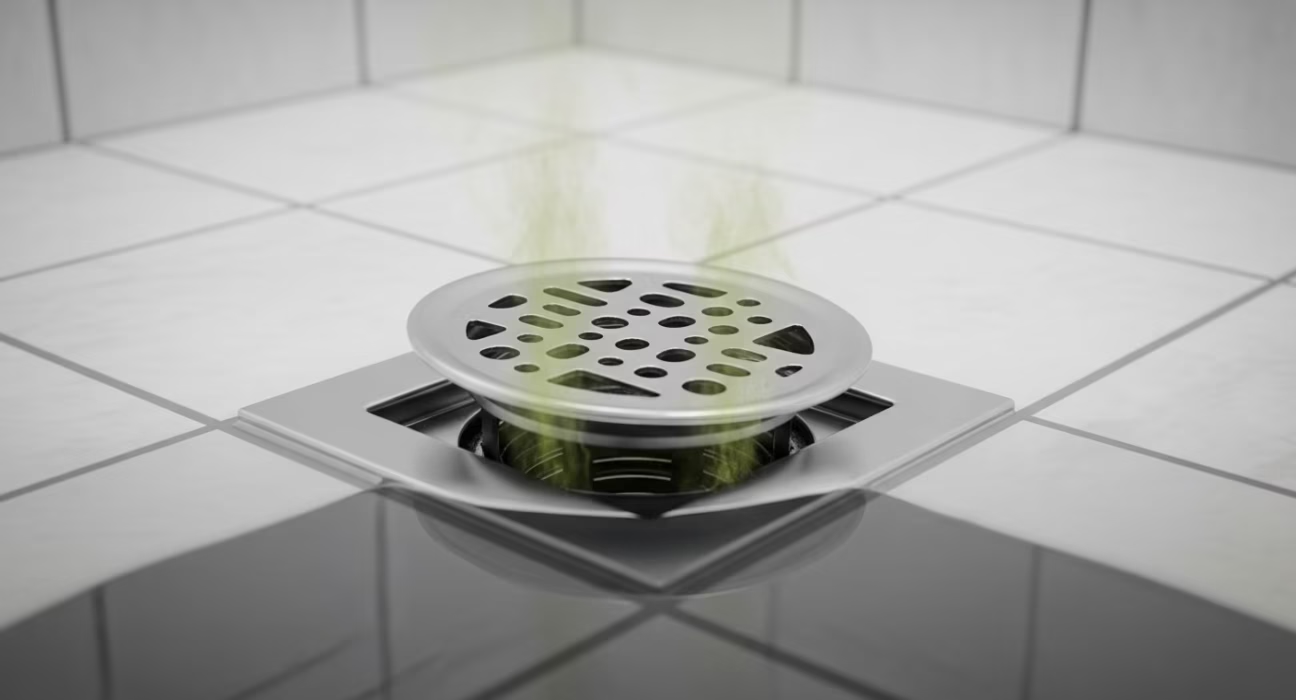
A P-trap is a curved section of drainpipe designed to hold a small amount of water. This water creates a barrier that helps prevent gases from the drainage system from entering your home.
When a shower isn’t used regularly, the water may gradually evaporate.
Without that seal, sewer gases can travel up through the drain opening.
This is particularly common in guest bathrooms, vacation homes, and other infrequently used fixtures.
According to Michigan State University’s Environmental Health and Safety guidance, dry drain traps are a common source of indoor sewer-like odors. Restoring water to the trap may resolve the problem.
How to Fix a Dry Shower P-Trap
Try this simple check:
- Turn on the shower using a normal water temperature.
- Let the water run for approximately one or two minutes.
- Turn off the shower and allow the bathroom to ventilate.
- Check whether the odor decreases.
- Monitor the area to see if the smell returns.
If the odor disappears and doesn’t return, an evaporated water seal may have been the cause.
However, if a frequently used shower continues smelling like sewage, the issue may involve a leaking trap, siphoning, or another plumbing defect.
Repeatedly adding water won’t permanently repair a damaged system.
2. Hair and Soap Scum Are Decomposing Inside the Drain
Not every unpleasant drain smell comes directly from sewer gas.
Hair, skin cells, soap residue, shampoo, and body oils regularly enter a shower drain.
Over time, this material can accumulate around the drain cover and inside accessible sections of the pipe.
When organic debris remains wet, microorganisms may break it down and produce unpleasant odors.
The resulting smell can resemble sewage, especially when the buildup has been sitting for a long time.
You may also notice slower drainage or visible slime around the opening.
How to Remove the Buildup
Start with a visual inspection.
Put on rubber gloves and remove the drain cover according to the manufacturer’s instructions.
Use a flashlight to look for trapped hair and debris near the opening.
If material is visible:
- Remove accessible hair with a suitable plastic drain-cleaning tool.
- Collect the debris and dispose of it in the trash.
- Scrub accessible surfaces with a small brush and mild detergent.
- Rinse with water at a temperature appropriate for your plumbing.
- Reinstall the drain cover securely.
Avoid pushing sharp tools into the drain or forcing an object through a difficult bend.
If the water drains slowly even after removing visible debris, you may have a deeper obstruction.
Our guide on how to unclog a shower drain explains additional methods for handling hair clogs and standing water.
3. Biofilm Is Creating an Unpleasant Drain Odor
Even when your shower looks clean, a slimy layer of organic material may remain inside the drain.
This layer is commonly called biofilm.
Biofilm consists of microorganisms attached to a surface within a protective matrix. In household drains, it can develop where moisture and organic residue are continuously available.
Under certain conditions, microbial activity and decomposing material can contribute to unpleasant odors.
You might notice the smell when water moves through the drain or when the bathroom hasn’t been used for several hours.
How to Clean Drain Biofilm
Begin by removing visible debris from the drain opening.
Use a brush designed for drain cleaning to scrub accessible surfaces where buildup is present.
Remove loosened residue rather than forcing it farther down the pipe.
A suitable enzyme-based or microbial drain-maintenance product may help break down certain organic deposits, but its effectiveness depends on the specific product and conditions.
Always follow the manufacturer’s instructions and check compatibility with your plumbing or septic system.
Avoid assuming that pouring household chemicals down the drain will eliminate every source of odor.
If buildup is located deeper inside concealed plumbing, professional cleaning may be necessary.
What About Baking Soda and Vinegar?
Baking soda and vinegar are commonly suggested for smelly drains.
When combined, they produce carbon dioxide bubbles and a noticeable fizzing reaction.
However, visible fizzing doesn’t prove that the mixture has removed a stubborn biofilm or eliminated the underlying odor source.
For an accessible layer of sludge or hair, mechanical cleaning is generally a more dependable starting point.
Don’t mix vinegar with bleach, chemical drain openers, or other cleaning products.
Also, avoid pouring boiling water into plumbing that may not tolerate extreme temperatures.
4. A Plumbing Vent Problem Is Affecting Your Drain
Your home’s drainage system includes vent pipes that help maintain appropriate air pressure and allow plumbing gases to vent outside.
When a vent becomes obstructed or the drainage system isn’t functioning correctly, you may notice unusual sounds and drainage problems.
Possible warning signs include:
- Gurgling noises when nearby fixtures drain
- A toilet bubbling when the shower is running
- Recurring odors despite maintaining the water seal
- Water draining slowly from several fixtures
- Changes in the trap water level
A blocked vent doesn’t automatically mean sewer gas is being forced through a properly functioning P-trap. However, venting problems can contribute to pressure imbalances, trap siphoning, and drainage issues.
The University of Nebraska–Lincoln’s septic system troubleshooting guidance identifies improper plumbing and venting, unfilled traps, and wastewater backups as possible causes of indoor sewage odors.
What Should You Do?
Start by checking whether more than one plumbing fixture is affected.
If the problem occurs only in an unused shower, a dry trap may be more likely.
If multiple drains gurgle, empty slowly, or produce recurring sewer odors, contact a plumber.
Don’t climb onto the roof to inspect a plumbing vent unless you’re properly trained and equipped.
A qualified plumber can investigate the venting system and check for drainage defects.
5. A Damaged Drain or Sewer Connection Is Allowing Odors Indoors
Sometimes, persistent sewer odors indicate a plumbing problem that simple cleaning cannot resolve.
A damaged drain connection, loose fitting, leaking trap, or defective sewer line may allow wastewater or gases to escape.
Unlike surface buildup, these problems may be hidden behind walls, beneath flooring, or inside inaccessible plumbing spaces.
Look for warning signs such as damp flooring, recurring wastewater backups, unusually strong odors, and moisture damage near the shower.
If the smell persists after restoring the trap seal and cleaning accessible buildup, don’t continue adding household cleaning mixtures.
Have the plumbing inspected.
A professional may need to check the water seal, drainage connections, vent system, or sewer line.
How to Fix a Shower Drain That Smells Like Sewage
The right solution depends on the cause.
Use this simple sequence rather than trying several treatments at once.
Step 1: Restore the Water Seal
If the shower hasn’t been used recently, run water to refill its trap.
Allow the bathroom to ventilate and check whether the odor improves.
Step 2: Inspect the Drain Opening
Remove the drain cover safely and look for hair, soap residue, and trapped debris.
Clean only the sections you can access without damaging the fixture.
Step 3: Check the Water Flow
Run a small amount of water and observe whether it drains normally.
If water pools around your feet, you may be dealing with a clog rather than an odor problem alone.
Step 4: Look for Moisture and Leaks
Check accessible areas around the shower and nearby plumbing.
Persistent dampness, water stains, or visible leaks may indicate a larger issue.
Step 5: Seek Professional Help if the Smell Continues
If the odor returns quickly, several fixtures are affected, or you notice gurgling and backups, arrange a plumbing inspection.
A persistent sewer smell is not something to cover up indefinitely with air freshener.
Is a Sewer Smell From the Shower Drain Dangerous?
A mild musty odor from decomposing soap residue isn’t necessarily the same as exposure to sewer gas.
However, a strong sewage smell should be taken seriously.
Sewer gas may contain substances such as hydrogen sulfide and methane. At sufficiently high concentrations, these gases can create health or safety hazards.
The US Environmental Protection Agency’s indoor air quality guidance explains that sewer gas exposure may irritate the eyes, nose, and throat or cause difficulty breathing.
The odor alone cannot establish which gas is present or how much exposure has occurred.
If you notice a strong or sudden sewer-like smell, particularly with dizziness, headaches, eye irritation, or breathing difficulties, leave the affected area and contact the appropriate emergency or utility service.
Do not enter enclosed plumbing spaces or attempt to investigate a suspected gas release yourself.
If you’re uncertain whether the odor is sewer gas or a natural gas leak, leave the area and contact the gas utility or emergency services from a safe location.
Can a Smelly Shower Drain Attract Drain Flies?
Damp organic material inside drains can provide breeding conditions for certain small insects.
Drain flies, also called moth flies, commonly develop in moist organic deposits.
If your shower has persistent slime, moisture problems, or neglected drainage, you may notice tiny, fuzzy insects resting on nearby walls.
However, a smelly drain doesn’t automatically mean drain flies are present.
Similarly, not every drain fly infestation produces a noticeable sewage smell.
If you’re seeing small moth-like flies around the shower, our guide on how to get rid of drain flies explains how to identify and address their breeding sources.
For other small insects associated with plumbing, our article on how to kill gnats in drains covers identification and practical troubleshooting.
This way, you can treat the odor and any insect activity based on their actual causes rather than assuming they’re the same problem.
How to Prevent Shower Drain Odors
Once you’ve resolved the cause, routine maintenance can help prevent similar problems.
Run water in unused showers. Periodically replenish the water seal in rarely used fixtures.
Use a hair catcher. Prevent hair and debris from accumulating inside the drain.
Clean accessible buildup. Remove trapped organic material before it develops into a stubborn deposit.
Fix leaks promptly. Moisture problems can create unpleasant smells and damage nearby materials.
Watch for slow drainage. Address recurring clogs rather than allowing standing water and residue to accumulate.
Maintain septic systems where applicable. Follow appropriate inspection and maintenance schedules.
Avoid unnecessary chemicals. Don’t rely on repeated bleach, vinegar, or drain-cleaner treatments to hide persistent sewage odors.
These practices can reduce common sources of unpleasant smells, but they won’t correct defective plumbing or venting.
Final Thoughts
When your shower drain smells like sewage, start by checking the simplest possible cause: a dry P-trap.
Restoring the water seal may solve the problem in a shower that hasn’t been used for a while.
If that doesn’t help, inspect accessible drain buildup, check water flow, and look for moisture or plumbing problems.
Avoid relying on repeated chemical treatments to cover up the odor.
A clean drain can help reduce smells caused by organic residue, but persistent sewer-gas odors require identifying and correcting the underlying plumbing issue.
Getting to the source is the best way to make your bathroom comfortable again.
FAQs:
Why does my shower drain smell like rotten eggs?
A rotten egg odor may come from sewer gas, a dry P-trap, or decomposing organic material. Persistent smells require further investigation.
Will running water stop a sewer smell?
Yes, if the problem is an evaporated P-trap water seal. If the odor continues, organic buildup or a plumbing defect may be responsible.
Can baking soda and vinegar remove shower drain odors?
The mixture may temporarily affect some odors, but it doesn’t reliably remove stubborn biofilm or repair sewer-gas leaks.
Why does my shower smell like sewage after cleaning?
The odor may come from deeper buildup, a dry or damaged trap, plumbing leaks, or ventilation problems that surface cleaning cannot fix.
When should I call a plumber for a smelly shower drain?
Call a plumber if the smell persists, multiple fixtures gurgle or back up, or you suspect leaks, damaged pipes, or venting problems.